
 By Robert Smith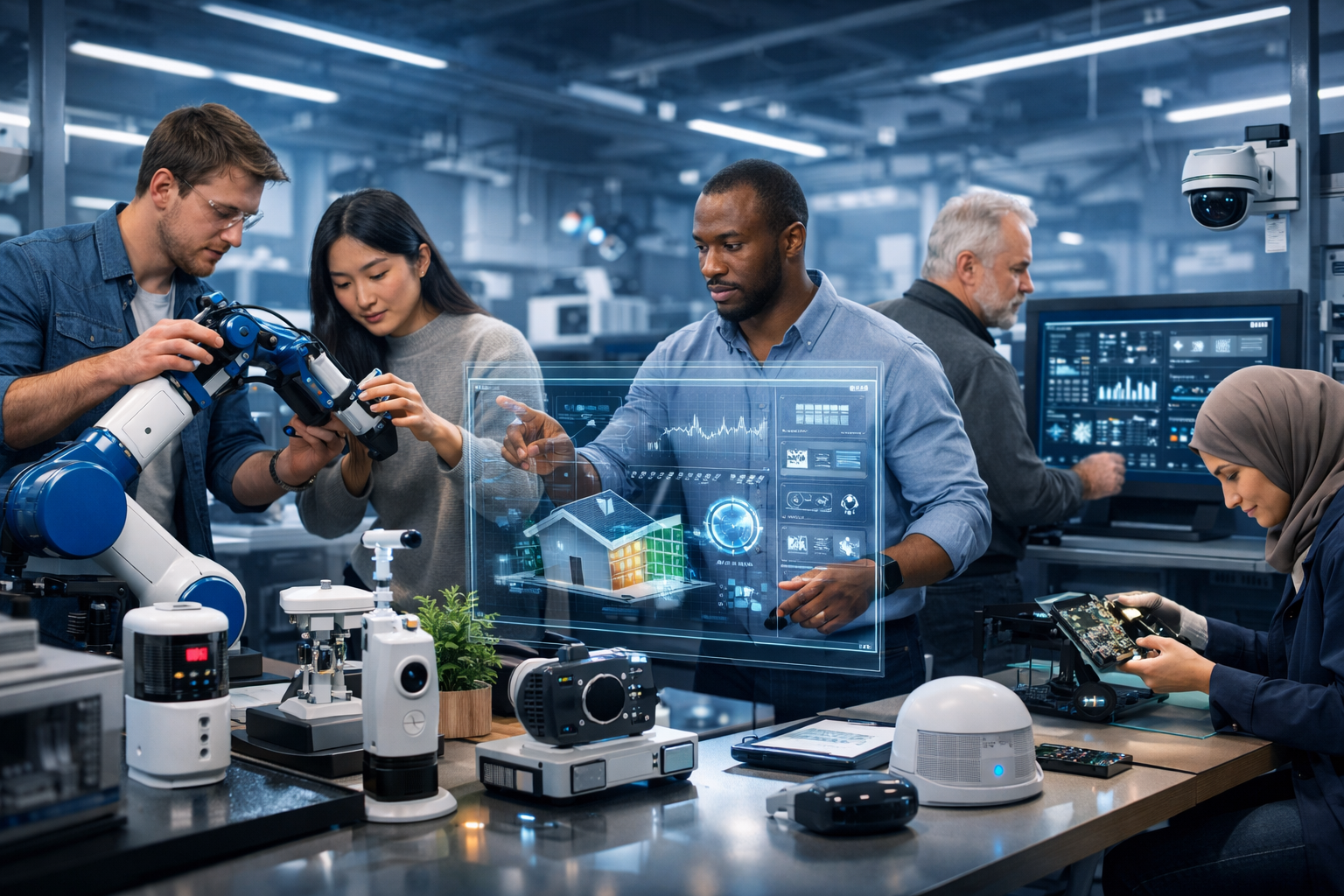
Sensors & devices are the foundation of IoT & automation systems. Without them, machines would have no way to detect changes in their environment, collect data, or respond intelligently. In modern smart systems, sensors capture real-world information, while devices process, transmit, and act on that data automatically.
For a comprehensive overview of IoT sensors, see this guide on IoT sensors and their applications. If you are new to IoT & automation, this beginner-friendly guide explains how sensors and devices work, their types, technical components, communication methods, and their role in building efficient automated systems.
What Are Sensors in IoT & Automation?
A sensor is a hardware component that detects physical, chemical, or environmental changes and converts them into electrical signals. These signals can then be processed by controllers or cloud systems.
In IoT & automation, sensors serve as the “eyes and ears” of a system. They continuously monitor conditions and provide real-time data.
Common measurements include:
- Temperature
- Humidity
- Pressure
- Light intensity
- Motion
- Proximity
- Gas levels
- Vibration
Sensors allow machines to understand their surroundings without human intervention.
What Are Devices in IoT & Automation?
Devices are hardware units that process sensor data and perform actions. In IoT systems, devices may include:
- Microcontrollers
- Gateways
- Actuators
- Edge computing units
- Smart controllers
Devices receive signals from sensors, analyze the information, and trigger automated responses. For example, if a temperature sensor detects overheating, a device may activate a cooling system automatically.
In simple terms:
- Sensors collect data
- Devices act on data
How Sensors Work: Basic Technical Explanation?
Sensors operate by converting physical phenomena into electrical signals. This conversion process is known as transduction.
For example:
- A temperature sensor detects heat changes.
- The heat variation alters electrical resistance.
- The change in resistance produces a voltage signal.
- The voltage is converted into digital data.
Most modern IoT sensors use Analog-to-Digital Converters (ADC) to transform analog signals into digital values that microcontrollers can interpret.
Types of Sensors Used in IoT & Automation
Different IoT applications require different sensor types. Below are the most commonly used sensors in automation systems.
1. Temperature Sensors
Temperature sensors measure heat levels in industrial machines, HVAC systems, and environmental monitoring systems.
Examples include:
- Thermocouples
- RTDs (Resistance Temperature Detectors)
- Thermistors
2. Humidity Sensors
Humidity sensors measure moisture levels in air. These are widely used in smart agriculture and climate control systems.
3. Pressure Sensors
Pressure sensors detect force applied by liquids or gases. They are common in manufacturing and energy systems.
4. Motion and Proximity Sensors
Motion sensors detect movement, while proximity sensors detect objects without physical contact. These are used in security systems and automated production lines.
5. Gas Sensors
Gas sensors detect harmful or combustible gases in industrial environments, improving workplace safety.
6. Vibration Sensors
Vibration sensors monitor machine health and are essential for predictive maintenance.
Actuators: The Action Devices in Automation
Actuators are a special type of device in IoT & automation systems. While sensors collect data, actuators perform physical actions.
Examples include:
- Electric motors
- Valves
- Relays
- Hydraulic systems
If a sensor detects high pressure in a pipeline, an actuator may open a valve to release excess pressure automatically.
Actuators convert electrical signals into mechanical motion.
Communication Between Sensors & Devices
For IoT & automation systems to function efficiently, sensors and devices must communicate reliably.
Common communication protocols include:
- MQTT (Message Queuing Telemetry Transport)
- HTTP/HTTPS
- CoAP (Constrained Application Protocol)
- Zigbee
- Bluetooth Low Energy (BLE)
- Wi-Fi
- LoRaWAN
These protocols enable data transfer between sensors, edge devices, and cloud platforms.
In industrial environments, wired protocols like Modbus and Ethernet/IP are often used for higher reliability.
Edge Devices in IoT & Automation
Edge devices act as local processing units between sensors and the cloud. Instead of sending all data to a remote server, edge devices analyze data locally.
Benefits of edge processing include:
- Reduced latency
- Faster response times
- Lower bandwidth usage
- Improved reliability
For example, a factory machine can shut down immediately if vibration levels exceed safe thresholds without waiting for cloud instructions.
Power Management in IoT Sensors & Devices
Power efficiency is critical in IoT systems, especially for remote or battery-operated sensors.
Common power strategies include:
- Low-power microcontrollers
- Sleep modes
- Energy harvesting (solar or vibration-based)
- Efficient communication protocols
Low-power design extends device lifespan and reduces maintenance costs.
Data Flow in IoT & Automation Systems
Understanding data flow helps beginners grasp how sensors & devices work together.
Step 1: Sensor detects environmental change
Step 2: Signal converted to digital data
Step 3: Microcontroller processes data
Step 4: Edge device analyzes conditions
Step 5: Action triggered or data sent to cloud
Step 6: Cloud analytics optimize performance
This continuous loop enables real-time automation and intelligent decision-making.
Security Considerations for Sensors & Devices
Security is a major concern in IoT & automation systems. Because sensors and devices are connected to networks, they can be vulnerable to cyber threats.
Best security practices include:
- Encrypted communication
- Secure firmware updates
- Device authentication
- Network segmentation
- Access control policies
Securing endpoints is essential to protect industrial operations.
Applications of Sensors & Devices in IoT & Automation
Sensors & devices are used in various industries and smart environments.
Smart Manufacturing
Factories use sensors to monitor machine performance, temperature, and vibration. Devices automate production lines and reduce downtime.
Smart Agriculture
Soil moisture sensors monitor crop conditions. Automated irrigation systems activate when moisture drops below target levels.
Smart Buildings
Sensors detect occupancy and adjust lighting and HVAC systems automatically to save energy.
Healthcare Monitoring
Wearable sensors track heart rate and activity levels. Devices transmit health data for remote monitoring.
Smart Energy Systems
Sensors measure power consumption and detect grid faults. Devices optimize energy distribution.
Integration with Cloud and AI
Modern IoT & automation systems integrate sensors and devices with cloud platforms and artificial intelligence.
Cloud platforms provide:
- Data storage
- Advanced analytics
- Predictive insights
- Remote monitoring
AI algorithms analyze sensor data to detect anomalies and forecast equipment failures.
This integration enhances automation from reactive systems to predictive systems.
Benefits of Sensors & Devices in IoT & Automation
The combination of sensors & devices delivers measurable improvements.
Increased Efficiency
Automated systems reduce manual intervention and improve operational accuracy.
Real-Time Monitoring
Organizations gain visibility into processes instantly.
Predictive Maintenance
Vibration and temperature sensors help prevent unexpected breakdowns.
Cost Reduction
Optimized systems reduce energy waste and maintenance expenses.
Scalability
IoT devices allow businesses to expand systems without major infrastructure changes.
Challenges in Implementing Sensors & Devices
Although powerful, IoT systems face several challenges.
Device Compatibility
Not all sensors support the same communication standards.
Network Reliability
Poor connectivity can disrupt automation processes.
Data Overload
Large volumes of sensor data require effective filtering and processing.
Maintenance
Devices require regular firmware updates and calibration.
Proper planning and system design minimize these challenges.
The Future of Sensors & Devices in IoT & Automation
Emerging technologies are making sensors smaller, smarter, and more energy-efficient.
Future trends include:
- AI-enabled smart sensors
- 5G connectivity
- Self-calibrating devices
- Improved cybersecurity hardware
- Advanced edge computing
As innovation continues, sensors & devices will become even more intelligent and autonomous.
Conclusion
Sensors & devices are the core building blocks of IoT & automation systems. Sensors detect real-world changes, while devices process data and trigger automated actions. Together, they create intelligent systems capable of real-time monitoring, predictive maintenance, and optimized operations.
For beginners, understanding how sensors convert physical signals into digital data and how devices communicate and act on that data is essential. Although implementation requires careful attention to security, power management, and integration, the benefits of IoT & automation are substantial.
As technology evolves, sensors and devices will continue to drive innovation across manufacturing, agriculture, healthcare, energy, and smart infrastructure.