
 By Robert Smith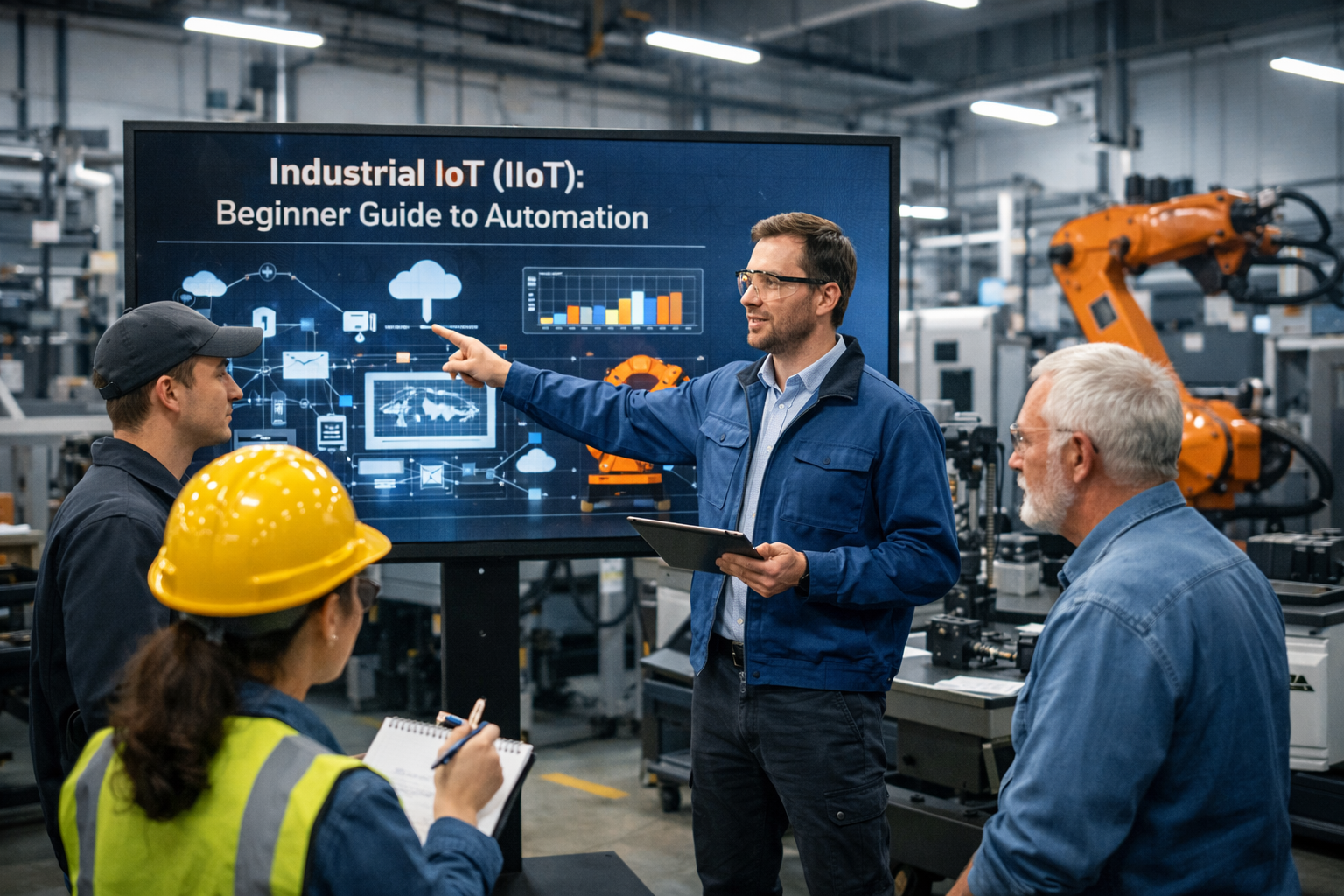
Industrial IoT (IIoT) is transforming the way factories, warehouses, energy plants, and logistics systems operate. By combining IoT & automation technologies, Industrial IoT enables machines, sensors, and software systems to communicate in real time.
This connectivity helps organizations increase efficiency, reduce downtime, and make smarter decisions based on data. For a broader overview of how connected industrial systems work in real environments, this resource on connected industrial systems architecture explains the foundational concepts in detail.
In this beginner-friendly technical guide, you will learn what Industrial IoT (IIoT) is, how it works, its core components, real-world applications, benefits, challenges, and how it supports modern automation strategies.
What Is Industrial IoT (IIoT)?
Industrial IoT (IIoT) refers to the use of connected sensors, devices, and control systems in industrial environments. Unlike consumer IoT, which focuses on smart homes and wearable devices, IIoT is designed for manufacturing, energy, transportation, oil and gas, utilities, and other heavy industries.
IIoT is a subset of the broader Internet of Things (IoT), but it emphasizes:
- High reliability
- Real-time monitoring
- Industrial-grade hardware
- Advanced automation integration
- Secure and scalable networks
Industrial IoT connects machines, control systems, and enterprise software to collect, analyze, and act on operational data.
How Industrial IoT (IIoT) Works?
Industrial IoT works through a structured architecture that connects physical equipment to digital platforms. The process typically includes the following steps:
1. Data Collection
Sensors and actuators are installed on industrial equipment. These devices measure:
- Temperature
- Pressure
- Vibration
- Flow rates
- Voltage and current
- Machine status
These sensors continuously collect real-time data from machines and production lines.
2. Connectivity
The collected data is transmitted using industrial communication protocols such as:
- MQTT
- OPC UA
- Modbus
- Ethernet/IP
Data can travel through wired networks, wireless systems, or cellular networks depending on the facility’s infrastructure.
3. Edge Computing
In many IIoT systems, data is processed locally using edge devices. Edge computing reduces latency and allows real-time decision-making without relying entirely on cloud systems.
For example, if a motor overheats, the edge system can immediately trigger an alert or shut down the equipment.
4. Cloud and Data Analytics
Data that does not require instant action is sent to cloud platforms. Cloud systems perform:
- Data storage
- Big data analysis
- Predictive modeling
- Machine learning analysis
This allows companies to identify patterns, detect inefficiencies, and forecast maintenance needs.
5. Automation and Control
Industrial IoT integrates with automation systems such as PLCs (Programmable Logic Controllers), SCADA systems, and DCS (Distributed Control Systems). These systems automatically adjust machine operations based on data insights.
Key Components of Industrial IoT (IIoT)
To understand Industrial IoT in IoT & automation, it is important to examine its core components.
1. Sensors and Actuators
Sensors collect environmental and operational data. Actuators perform actions such as opening valves or adjusting motor speeds.
2. Industrial Controllers
PLCs and microcontrollers manage machine operations and execute automated tasks.
3. Communication Networks
Reliable communication infrastructure ensures secure and stable data transfer between devices and systems.
4. Edge Devices
Edge gateways aggregate data from multiple sensors and perform preliminary processing before sending data to the cloud.
5. Cloud Platforms
Cloud platforms store and analyze massive volumes of industrial data.
6. Analytics and AI
Advanced analytics and artificial intelligence enable predictive maintenance, anomaly detection, and performance optimization.
Industrial IoT (IIoT) in Automation
Industrial IoT plays a central role in modern automation systems. Traditional automation relies on fixed programming and local control. IIoT enhances automation by introducing data-driven intelligence.
Here’s how Industrial IoT improves automation:
- Real-time performance monitoring
- Automated decision-making
- Predictive maintenance
- Remote equipment management
- Continuous optimization
Instead of reacting to failures, organizations can predict and prevent them.
Real-World Applications of Industrial IoT (IIoT)
Industrial IoT is used across multiple industries. Below are practical examples.
Smart Manufacturing
In manufacturing plants, IIoT systems monitor equipment health, production speed, and product quality. Real-time dashboards provide visibility into factory performance.
Benefits include:
- Reduced downtime
- Improved product quality
- Higher production efficiency
Predictive Maintenance
By analyzing vibration and temperature data, IIoT systems can predict when machinery components are likely to fail.
This reduces:
- Unexpected breakdowns
- Maintenance costs
- Production delays
Energy Management
Industrial IoT monitors energy consumption in factories and power plants. Companies can identify inefficiencies and reduce operational costs.
Supply Chain Optimization
IIoT tracks inventory levels, shipping conditions, and warehouse operations. Sensors can monitor temperature-sensitive goods during transport.
Remote Monitoring
Oil rigs, wind farms, and water treatment plants use IIoT for remote asset monitoring. Engineers can oversee operations from centralized control centers.
Benefits of Industrial IoT (IIoT)
Industrial IoT provides measurable business and technical advantages.
Increased Operational Efficiency
Real-time monitoring reduces bottlenecks and improves workflow optimization.
Reduced Downtime
Predictive maintenance minimizes unexpected equipment failures.
Cost Savings
Automation and data-driven insights reduce energy waste and maintenance costs.
Improved Safety
Sensors detect hazardous conditions, improving worker safety.
Data-Driven Decision Making
Industrial IoT provides accurate, real-time data for strategic planning.
Challenges of Industrial IoT Implementation
While Industrial IoT offers significant advantages, implementation can be complex.
Cybersecurity Risks
Industrial systems are high-value targets for cyberattacks. Securing IIoT networks requires:
- Encryption
- Network segmentation
- Strong authentication
- Continuous monitoring
Integration with Legacy Systems
Many factories use older equipment that may not support modern connectivity. Retrofitting legacy machines can be costly.
Data Management
Industrial IoT generates massive volumes of data. Organizations must manage storage, processing, and analysis efficiently.
Skilled Workforce Requirements
Implementing IIoT requires expertise in networking, cybersecurity, data analytics, and automation engineering.
Industrial IoT (IIoT) and Industry 4.0
Industrial IoT is a foundational technology of Industry 4.0. Industry 4.0 refers to the fourth industrial revolution, characterized by digital transformation in manufacturing and industrial operations.
IIoT enables:
- Smart factories
- Autonomous production lines
- Digital twins
- Real-time analytics
- AI-powered optimization
Without Industrial IoT, Industry 4.0 would not be possible.
Best Practices for Implementing Industrial IoT
If you are new to IoT & automation, follow these best practices when implementing Industrial IoT.
1. Start with Clear Objectives
Define measurable goals such as reducing downtime by 20% or lowering energy consumption by 15%.
2. Conduct a Pilot Project
Test IIoT in a small area before scaling across the entire organization.
3. Focus on Security from the Start
Build cybersecurity measures into the system architecture.
4. Choose Scalable Solutions
Select hardware and cloud platforms that can grow with your operations.
5. Train Your Team
Ensure engineers and technicians understand both automation systems and data analytics.
The Future of Industrial IoT (IIoT)
The future of Industrial IoT is driven by advancements in:
- Artificial intelligence
- 5G connectivity
- Edge computing
- Digital twins
- Autonomous robotics
As connectivity improves and costs decrease, more industries will adopt IIoT solutions.
Future IIoT systems will become more autonomous, adaptive, and intelligent. Machines will not only collect data but also self-optimize performance without human intervention.
Conclusion
Industrial IoT (IIoT) is a powerful combination of IoT & automation technologies designed for industrial environments. By connecting machines, sensors, and analytics platforms, IIoT enables real-time monitoring, predictive maintenance, and data-driven automation.
For beginners, understanding the core components—sensors, connectivity, edge computing, cloud platforms, and analytics—is the first step toward mastering Industrial IoT. Although implementation requires careful planning and strong cybersecurity, the long-term benefits include improved efficiency, cost savings, and operational resilience.
As Industry 4.0 continues to evolve, Industrial IoT will remain a central technology shaping the future of smart manufacturing and automated industrial systems.