
 By Robert Smith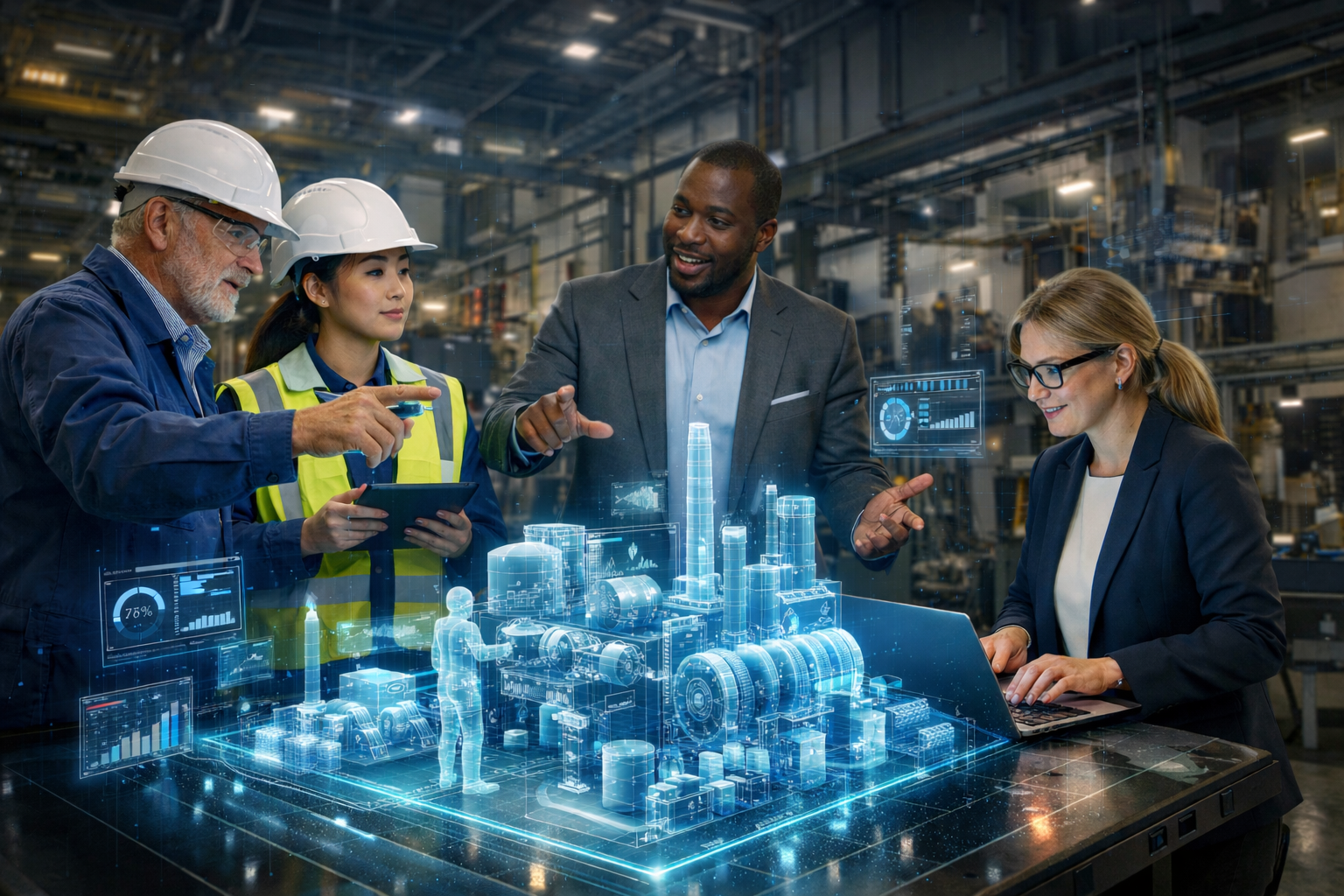
Digital twin platforms have become increasingly important in modern industrial operations. As organizations pursue higher efficiency, resilience, and predictability, they require tools that go beyond static monitoring. As a result, many industrial teams now rely on digital twins to mirror physical assets and processes within software environments.
Rather than replacing physical systems, digital twin platforms complement them. By doing so, they allow teams to understand behavior, test scenarios, and predict outcomes without disrupting operations. To understand the core idea, refer to this digital twin definition and concept that shows how virtual models stay synchronized with real assets using real-time data.
What Are Digital Twin Platforms?
A digital twin platform is a software environment that creates and maintains a virtual representation of a physical asset, system, or process. This representation remains synchronized with its real-world counterpart through continuous data updates.
Digital twins may represent many elements, including:
- Individual machines or components
- Production lines and processes
- Facilities and infrastructure
- Vehicles, fleets, or logistics networks
Unlike static models, digital twins evolve over time. As sensor data changes, the virtual model updates accordingly. Consequently, organizations always work with an accurate, current view of asset behavior.
Why Digital Twin Platforms Are Hardware-Adjacent in Industrial SaaS?
Digital twin platforms qualify as hardware-adjacent SaaS because they depend directly on data generated by physical equipment. Although the platform itself operates in the cloud, its accuracy relies on real-world hardware inputs.
These platforms typically integrate with:
- Industrial IoT sensors
- SCADA and control systems
- MES platforms
- Asset condition monitoring tools
- Engineering and design software
By integrating these sources, digital twin platforms form a bridge between physical operations and SaaS-based intelligence. As a result, decisions reflect real operating conditions rather than theoretical assumptions.
Core Components of a Digital Twin Platform
Modern digital twin platforms rely on several interconnected components. Together, these elements ensure accuracy, scalability, and insight.
Physical Assets and Data Sources
At the foundation lies the physical asset itself. Sensors, controllers, and operational systems continuously capture data such as temperature, vibration, pressure, speed, and energy consumption.
Without this data, the digital twin would lose relevance. Therefore, reliable data collection is critical.
Virtual Models and Simulations
Digital twin platforms use mathematical, physics-based, or data-driven models to represent asset behavior. These models simulate wear, stress, energy flow, and process variation.
As conditions change, models update automatically. Thus, simulations reflect real operating environments rather than static assumptions.
Data Integration and Connectivity Layer
A robust integration layer connects data sources to the digital twin platform. APIs, streaming pipelines, and edge gateways manage data flow securely and reliably.
Because industrial environments generate large volumes of data, this layer ensures performance and consistency.
Analytics and Intelligence
Once data enters the platform, analytics engines process it. These engines apply statistical analysis, machine learning, and rule-based logic.
As a result, digital twin platforms detect anomalies, forecast failures, and recommend optimization actions.
Visualization and User Interfaces
Dashboards and visual models allow users to interact with digital twins. Engineers explore performance trends, while operators test scenarios and managers evaluate outcomes.
Through visualization, complex data becomes actionable insight.
Types of Digital Twins in Industrial Environments
Digital twin platforms support different levels of abstraction depending on business needs.
- Component twins represent individual parts
- Asset twins represent complete machines
- Process twins model workflows or production lines
- System twins simulate entire facilities or networks
Typically, organizations begin with asset-level twins. Over time, they expand toward system-level twins as data maturity increases.
Digital Twin Platforms in SaaS-Based Industrial Architectures
Historically, digital twin technology lived inside isolated engineering tools. Today, many organizations adopt cloud-based digital twin SaaS platforms.
Benefits of SaaS-Based Digital Twin Platforms
SaaS delivery provides several advantages. First, cloud platforms scale easily as asset volumes grow. Second, centralized access improves collaboration across teams and locations. Third, automatic updates keep models current.
Because of these benefits, SaaS-based digital twins integrate naturally into modern Industrial SaaS stacks.
Integration with Other Industrial SaaS Systems
Digital twin platforms rarely operate alone. Instead, organizations integrate them with other hardware-adjacent systems, including:
- EAM and CMMS platforms for maintenance
- MES systems for production execution
- SCADA platforms for operational monitoring
- QMS systems for quality and compliance
Through these integrations, insights generated by digital twins directly influence operational decisions.
Key Use Cases for Digital Twin Platforms
Digital twin platforms support a wide range of industrial use cases.
Predictive Maintenance
By modeling asset behavior over time, digital twins predict failures before they occur. Therefore, maintenance teams schedule interventions proactively rather than reactively.
Performance Optimization
Digital twins allow teams to test operating parameters virtually. For example, engineers simulate load changes or process adjustments.
As a result, organizations optimize performance without risking production.
Design and Engineering Validation
During design phases, digital twins validate performance under real-world conditions. Consequently, costly redesigns decrease after deployment.
Training and Operational Planning
Digital twins also support training initiatives. Meanwhile, operators practice scenarios safely using virtual environments.
Industries That Benefit from Digital Twin Platforms
Delivering value across many asset-intensive industries.
Common examples include:
- Manufacturing and industrial automation
- Energy and utilities
- Oil and gas operations
- Transportation and logistics
- Smart buildings and infrastructure
Enterprise solutions from providers such as Siemens and Dassault Systèmes frequently support digital twin deployments at scale.
Key Benefits of Digital Twin Platforms
Organizations that implement and experience strategic advantages.
First, decision-making improves because teams rely on real-time models. Second, operational risk decreases since changes are tested virtually. Third, asset utilization increases through continuous optimization.
Additionally, sustainability improves as energy use and waste decline.
Common Challenges in Digital Twin Adoption
Despite their value and representing challenges.
Poor data quality reduces accuracy. Likewise, integration complexity can slow progress. Furthermore, model development requires collaboration between engineering, IT, and operations.
To address these issues, successful organizations start with focused use cases and scale gradually.
Security and Governance Considerations
Connecting deeply with operational systems, security remains critical. Therefore, organizations must enforce access controls, encryption, and continuous monitoring.
At the same time, governance ensures model accuracy, data ownership, and long-term trust.
The Future of Digital Twin Platforms in Industrial SaaS
Continuing to evolve alongside Industrial SaaS ecosystems. For instance, AI improves prediction accuracy, while edge computing accelerates synchronization.
Meanwhile, open standards simplify integration. Ultimately, digital twins function as the intelligence layer connecting planning, execution, and optimization.
Conclusion
Representing a powerful capability within Industrial SaaS hardware-adjacent environments. By linking physical assets with continuously updated virtual models, they enable simulation, prediction, and optimization at scale.
For organizations managing complex equipment and processes, digital twins provide far more than visualization. Ultimately, they reduce risk, improve performance, and support smarter decisions. When implemented effectively, becoming a critical driver of operational excellence and long-term industrial transformation.