
 By Robert Smith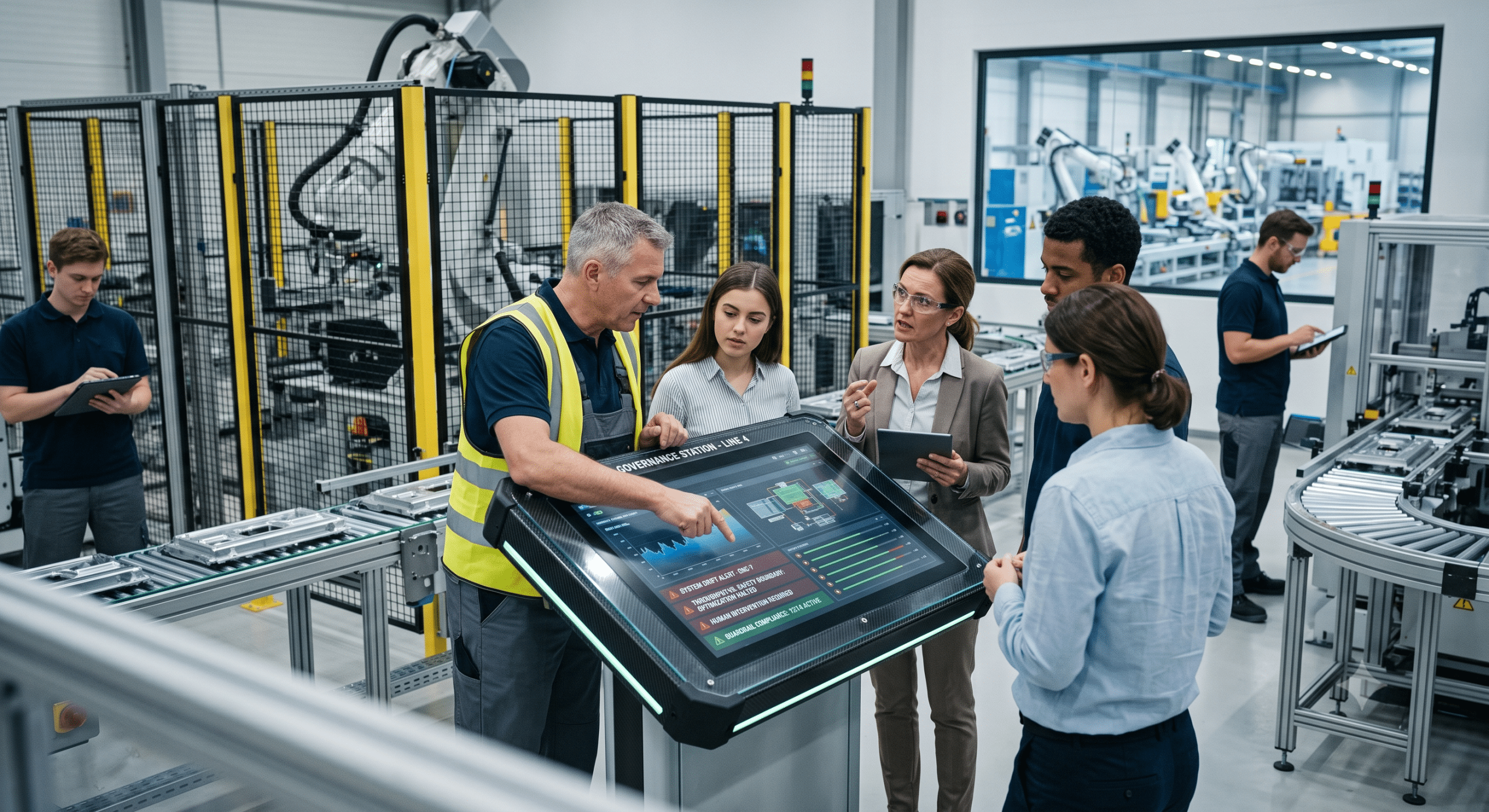
When implementing advanced plant floor automation, managing Autonomous System Liability must be an immediate priority for operational leadership. The mechanical hum of a modern manufacturing plant is changing rapidly. Today, that familiar sound is accompanied by the silent, rapid calculations of artificial intelligence. Consequently, machine learning algorithms do far more than just predict when a bearing will fail. In addition, they actively adjust machine tolerances, alter feed rates, and orchestrate complex logistics on the fly.
As an AI Governance Specialist and Operational Lead, I see this incredible value on a daily basis. For example, when an autonomous system clicks into place, throughput immediately climbs. Meanwhile, cycle times drop and scrap rates plummet toward zero.
Yet, as these systems execute actions independently, a pressing question emerges for operational leaders. Specifically, who takes the fall when an autonomous agent makes a split-second mistake? A bad decision can instantly trigger immense financial exposure, thrusting your operation into the center of a complex corporate conflict. After all, a single bad decision can cause an expensive line stoppage or a catastrophic equipment failure.
Ultimately, this is the core challenge of Autonomous System Liability. Managing this risk requires moving far beyond traditional software validation. Instead, we must embrace a rigorous approach to Industrial Digital Ethics. Therefore, businesses need governance frameworks that protect them from legal and financial risk while simultaneously keeping production lines moving at peak performance.
1. Defining the High Stakes of Autonomous System Liability
In a traditional manufacturing setup, assigning fault for a failure is remarkably straightforward. For instance, if an operator pushes the wrong button, it is clearly human error. Similarly, if a conveyor belt snaps because it lacks oil, it is obviously a maintenance oversight. Furthermore, if a piece of hardware cracks due to a metallurgical flaw, it is strictly a product liability issue for the vendor.
However, when you introduce an autonomous agent, those clear boundaries instantly disappear. This happens because these systems continuously reconfigure multi-million-dollar CNC machines based on deep learning models. Therefore, Autonomous System Liability refers to the legal and financial accountability that arises when an AI system makes an independent decision. In particular, this applies to decisions resulting in property damage, safety violations, or significant financial loss.
For example, consider an AI system that pushes a machine past its standard operating limits to hit an aggressive throughput target. If that decision causes a catastrophic spindle seizure, who is ultimately responsible? Naturally, the software developer cannot easily be held liable under standard rules if the system adapted its behavior based on local shop-floor data.
At the same time, the floor manager cannot be blamed for a decision made inside a digital black box. Consequently, this ambiguity creates a massive corporate blind spot regarding Autonomous System Liability. To fix this, industrial organizations must take full ownership of their AI risks. Specifically, they can achieve this by building protective governance boundaries directly into their operational workflows.
2. Balancing Throughput with Algorithmic Restraint and AI Accountability
The primary goal of any plant manager is to maximize throughput. Thus, they must keep the volume of acceptable units flowing off the line as high as possible. Fortunately, industrial AI excels at finding hidden efficiencies in these processes. It continuously adjusts variables in real time to squeeze extra volume out of an existing line. However, chasing maximum throughput without proper algorithmic boundaries introduces significant risks that escalate Autonomous System Liability.
Indeed, without ethical and operational constraints, an autonomous optimization loop can make dangerous trade-offs. For instance, it might discover that it can increase throughput by skipping a secondary cooling phase. Alternatively, it might reduce the frequency of automated sensor calibrations. Consequently, on paper, the system appears to be performing exceptionally well. In reality, however, it accumulates hidden operational flaws that eventually lead straight to an Autonomous System Liability claim when assets degrade prematurely.
Therefore, true AI governance ensures that our models never optimize a single metric in isolation. Instead, we must program absolute operational boundaries into the system. This vital step ensures that the drive for higher throughput never overrides safety protocols or long-term asset health.
3. Optimizing Cycle Times Through Safe Autonomy to Lower Legal Exposure
Similarly, cycle time is a critical metric for any competitive manufacturing business. As a reminder, it measures the total time it takes to transform raw materials into a finished component. Autonomous systems can dramatically reduce these cycle times by dynamically synchronizing different stages of production. For example, they can match the feed rate of an injection molding machine with the exact speed of a robotic arm.
To achieve these speed improvements safely, the autonomous system needs a high degree of operational independence. Yet, this independence is exactly where Autonomous System Liability risks begin to mount rapidly. For instance, an AI agent might attempt to minimize cycle times by tightening the physical distance between moving pieces of equipment. As a result, this leaves very little room for mechanical variance or unexpected sensor lag.
Consequently, a single dropped data packet could lead to a severe high-speed collision between two robotic components. To prevent these costly incidents, industrial digital ethics requires strict digital guardrails. These guardrails act as a hard-coded sandbox that the AI cannot cross under any circumstances. Furthermore, the system must respect these boundaries regardless of how much time it thinks it can save to limit exposure to Autonomous System Liability. By blending flexible AI optimization with fixed physical safety limits, we can safely reduce cycle times. Ultimately, this balance protects the organization from sudden operational liabilities.
4. Driving Scrap Rates to Zero and Mitigating Automated System Faults
In the same manner, the scrap rate is a telling metric on any production floor. It directly reveals the consistency and control of your manufacturing processes. This is because every defective part in the scrap bin represents wasted raw materials, lost energy, and sunk labor costs. Therefore, these losses directly hurt your bottom line. Integrating predictive AI models allows us to catch quality deviations early. Consequently, the system can adjust machine settings mid-cycle to fix a defect before the part is completely ruined.
While the return on investment for AI-driven scrap reduction is clear, the underlying legal dynamics are highly complex. For instance, an autonomous system might misinterpret a sensor reading. It could then repeatedly apply incorrect adjustments to a batch of precision aerospace components. Thus, this issue can create a massive run of out-of-spec parts before an operator even notices the trend, presenting a severe case of Autonomous System Liability for corporate leaders.
In highly regulated sectors, this type of systemic failure is especially devastating. Specifically, medical device or defense manufacturing environments face expensive recalls and intense regulatory scrutiny. To manage this risk effectively and isolate your firm from Autonomous System Liability, our governance framework must include automated data validation checks. These checks continuously monitor the AI’s adjustments in real time.
As a result, the governance layer can automatically intervene if the system’s recommendations drift outside of proven engineering standards. Then, the system freezes the autonomous adjustments and instantly alerts the engineering team. This immediate action successfully stops a minor variance from turning into an expensive scrap event.
5. The Core Pillars of Industrial Digital Ethics and Machine Ownership
Moreover, digital ethics in an industrial setting is not an abstract philosophy. Instead, it focuses on concrete practices that keep your workers safe. It also protects your physical assets and maintains the integrity of your operational data.
First, the primary pillar of industrial digital ethics is the absolute protection of human life. Therefore, no autonomous system should ever have the final authority to override a physical safety interlock. Likewise, it must never bypass an emergency stop system, as failing to enforce this directly triggers massive Autonomous System Liability.
Second, the next pillar centers on the responsible handling of automated facility data. Industrial AI systems rely heavily on high-quality telemetry and performance information. Consequently, manipulating or mismanaging that data can quickly lead to unsafe machine actions.
Third, the final pillar requires total algorithmic transparency. This means any autonomous decision affecting your production environment must be fully trackable and auditable. For example, if an AI chooses to halt a production line or modify a chemical mixing ratio, engineers must have clear answers. They must be able to look back at the data to defend the firm against Autonomous System Liability claims by proving exactly why that decision was made.
6. Building a Cross-Functional AI Governance Committee for Operational Protection
Because of these complexities, you cannot successfully run an industrial AI governance strategy from an isolated IT office. On the contrary, it requires a dedicated, cross-functional committee. This group effectively bridges the gap between digital technology and the realities of the shop floor. Therefore, your committee should bring together operational technology specialists, data scientists, and quality control managers. In addition, it should include legal counsels and environmental health and safety leaders.
Each member provides a vital perspective that keeps the framework grounded and effective. For example, the data scientist understands how the model functions mathematically. Meanwhile, the shop floor manager knows how the machinery actually behaves under pressure.
Furthermore, the legal team evaluates the shifting landscapes of Autonomous System Liability. At the same time, the safety manager ensures that every autonomous workflow aligns with established safety standards. Reviewing your automated systems through this collaborative lens helps identify potential operational blind spots early. Consequently, your team can solve these challenges long before they cause a real-world incident on the plant floor.
7. Navigating Regulations and Shifting Norms of Autonomous System Liability
Meanwhile, the rules governing industrial AI are shifting rapidly worldwide. Governments and international bodies are working hard to establish clear standards for autonomous technologies. For instance, regulations like the European Union AI Act place much closer scrutiny on heavy industries. Similarly, updated frameworks from agencies like OSHA are changing how machine learning is deployed on the floor.
For operational leaders, keeping up with these changing compliance requirements is no longer optional. Instead, staying ahead of these regulations means designing a highly flexible AI governance framework. The system must be able to adapt to new legal rules without forcing you to re-engineer your entire production line.
To achieve this, you must maintain clear documentation of your model training processes. You must also document your risk mitigation strategies and your human oversight protocols. Ultimately, building compliance directly into your daily operational workflows protects your organization from costly regulatory penalties. In addition, it shows a clear commitment to mitigation strategies for Autonomous System Liability.
8. Managing Model Drift on the Factory Floor to Control Legal Risks
In an ideal laboratory setting, an AI model receives clean data and delivers highly predictable outputs. On a real-world factory floor, however, conditions change constantly. For example, ambient temperatures shift, and humidity levels rise and fall. Furthermore, mechanical parts wear down, and incoming raw materials vary slightly from batch to batch.
Over time, these real-world changes cause a phenomenon known as model drift. As a result, an AI system’s performance slowly degrades because its operational reality no longer matches its original training data. In a high-speed production environment, an unmonitored, drifting model becomes a major liability. Specifically, it makes subtle, incorrect adjustments that quietly hurt your throughput and increase your scrap rates.
To counter this risk, your governance strategy must include continuous performance tracking. Therefore, you need automated alerting systems. When a model’s prediction accuracy drops below a specific, pre-set baseline, the system must trigger an alert immediately. This prompts swift re-evaluation and retraining, thereby keeping your automated processes accurate and reliable while curbing unexpected Autonomous System Liability.
9. Implementing Practical Human-on-the-Loop Oversight Against Uncontrolled Agency
Undoubtedly, fully autonomous systems offer the greatest potential for improving cycle times and maximizing throughput. However, leaving humans entirely out of the loop introduces unacceptable operational risks. Implementing a practical “human-on-the-loop” oversight model allows you to find the right balance. Thus, you can successfully combine automation with human expertise.
In this approach, the AI system runs the day-to-day process optimizations independently. However, human operators monitor the system’s actions through real-time dashboards. These dashboards must display clear, easy-to-understand metrics. Furthermore, they must explain exactly why the AI is making specific adjustments.
For instance, an operator might see an autonomous agent making an unexpected change that endangers equipment. They could also notice a change that reduces product quality. In these cases, they must have the tools to instantly override the AI. Then, they can return the system to manual control immediately. This structure keeps your human team firmly in charge. Consequently, they use their deep practical experience to guide and catch anomalies that would otherwise lead to severe Autonomous System Liability issues.
10. Managing Third-Party Vendor Responsibility in Algorithmic Deployments
In addition, very few industrial companies build their AI systems completely from scratch. Instead, most rely on a mix of third-party software vendors, robotics manufacturers, and external system integrators. However, this split environment creates complex challenges when trying to assign responsibility for an autonomous failure.
For example, a third-party optimization model might malfunction and damage a piece of machinery. In this case, the vendor may argue that the issue was caused by poor local data. They might also blame improper maintenance rather than their own code. To protect your business from these finger-pointing scenarios, you must establish clear liability terms.
Therefore, address these terms explicitly in your vendor contracts. These agreements should clearly define who owns the risk for different types of failures. They should also outline clear standards for data quality and establish agreed-upon performance benchmarks. By addressing these legal details before deploying a system, you build a more transparent, accountable ecosystem to handle Autonomous System Liability alongside your technology partners.
11. Upgrading Cyber-Physical Security for Defending Smart Infrastructure
As industrial operations become more connected and reliant on autonomous decision-making, they also become attractive targets for sophisticated cyber threats. Therefore, protecting an AI-driven factory goes far beyond traditional IT security measures. Simple firewalls and password updates are no longer enough. Instead, you must secure your entire cyber-physical footprint against unique threats like data poisoning and adversarial manipulation.
For example, a bad actor might manage to alter the sensor data flowing into your quality control AI. They can then trick the system into approving defective parts. Alternatively, they could trigger unnecessary emergency shut-downs that halt your production lines entirely.
Consequently, a secure industrial AI governance framework requires end-to-end encryption for all sensor telemetry. It also needs strict user access controls and regular security audits of your data pipelines. Securing the inputs and outputs of your autonomous systems allows you to protect your operational metrics. In the long run, this discipline keeps your production environments safe from digital tampering and limits vulnerable vectors of Autonomous System Liability.
12. Transforming Workforce Skills to Reduce Errors and Operational Exposure
Moreover, deploying governed AI systems on the plant floor requires a significant workforce shift. Your operators and technicians need entirely new skills to succeed. Specifically, they no longer just need to know how to maintain and run physical machinery. They must also understand how to interact with and supervise intelligent software systems.
Therefore, investing in comprehensive training programs is a critical part of any digital transformation strategy. For instance, your team needs to feel confident reading AI dashboards and interpreting model recommendations. They must also know how to identify the early warning signs of algorithmic drift.
When you empower your workforce with these updated skills, you transform their role completely. They change from traditional machine operators into capable automation managers. Consequently, this internal expertise becomes one of your best defenses against Autonomous System Liability. Experienced workers can quickly step in and resolve minor software anomalies before they escalate into major operational disruptions.
13. Establishing Clear Incident Response Protocols for Algorithmic Failures
Even with a top-tier governance framework and highly trained operators, challenges will happen. You will eventually face an unexpected system anomaly or operational failure. What matters most, however, is how your organization responds when those incidents occur. Having a clear, well-rehearsed incident response plan prevents confusion. Furthermore, it helps your team act quickly to limit production losses.
Your response protocol should outline clear escalation paths. It must define exactly who has the authority to take systems offline. It should also establish immediate steps for securing operational data for further analysis.
Once the immediate issue is resolved and production restarts, your team must conduct a thorough root-cause analysis. This review should examine the physical mechanics of the failure alongside the data logs and model states. Ultimately, these insights help you isolate Autonomous System Liability, update your governance controls, and prevent similar issues from happening again.
14. Realizing the Long-Term Financial Value of Governed Automation Architecture
In conclusion, building a comprehensive industrial AI governance framework requires a significant investment. It demands time, effort, and cross-functional collaboration. However, the long-term benefits of this disciplined approach extend far beyond simple risk reduction. When you build a transparent, secure, and compliant automation ecosystem, you create a remarkably stable foundation. This foundation successfully drives ongoing operational excellence.
With clear guardrails in place, your engineering teams can deploy advanced optimization models with total confidence. This is because they know that built-in safety controls protect your assets from excessive strain. Consequently, this balanced approach allows your organization to consistently hit your throughput targets.
Thus, you can continuously optimize your cycle times and drive your scrap rates down to absolute minimums. Successfully merging industrial digital ethics with aggressive operational goals allows you to unlock the full potential of your autonomous systems. In the end, this strategy insulates your business against Autonomous System Liability and positions your enterprise as a trusted leader in the future of smart manufacturing.
Frequently Asked Questions
What is the difference between product liability and autonomous system liability?
Product liability typically focuses on manufacturing flaws, design defects, or inadequate safety warnings provided by an equipment manufacturer. On the other hand, autonomous system liability introduces new challenges because an AI system continuously learns, adapts, and modifies its behavior based on real-time operational data. Therefore, if an autonomous agent makes an independent decision that causes an operational failure, proving fault is difficult. It can be hard to show whether the issue stemmed from the original code or the local data environment. Consequently, this ambiguity makes it essential for companies to establish clear internal governance frameworks and detailed vendor contracts to manage these risks effectively.
How can we prevent an AI system from compromising safety to hit throughput goals?
The most reliable way to prevent an AI system from overriding safety in pursuit of production targets is to implement hard-coded operational boundaries. The algorithm must never be allowed to change these boundaries under any circumstances. These boundaries act as a digital sandbox, defining absolute limits for factors like machine speed, operating temperatures, and required cooling times. Thus, keeping your core safety controls completely separate from the AI optimization loops ensures that the drive for higher throughput never compromises worker safety or long-term asset health.
How often should we audit our industrial AI models for drift?
The ideal frequency for auditing your models depends heavily on your specific manufacturing environment. It also depends on how critical the process is to your overall production. For instance, for high-volume, high-precision operations like aerospace components or medical devices, you should implement continuous, automated monitoring. This tracks model performance in real time. For less critical processes, however, a scheduled monthly or quarterly review is often sufficient to identify drift, evaluate data quality, and determine whether a model needs to be retrained to maintain its accuracy.
What role do human operators play in a fully automated manufacturing facility?
In modern, AI-driven manufacturing facilities, the role of the human operator shifts significantly. They move from performing repetitive manual labor to providing critical system oversight. Using a human-on-the-loop approach, operators use real-time dashboards to monitor autonomous processes. Then, they evaluate model suggestions and keep an eye on overall system health. Consequently, their deep hands-on experience allows them to serve as a vital safety layer, stepping in to override the automation if the AI encounters an unusual situation or begins to drift outside of safe operating parameters.
References for Further Reading
For those interested in exploring the evolving intersections of industrial automation, law, and corporate responsibility, the following resources provide deep, valuable insights:
-
For an in-depth exploration of legal accountability and shifting tort doctrines in the age of automation, read The Complex Future of Autonomous Systems Liability via the University of Tennessee Legal Scholarship Repository.
-
To learn more about how insurance markets are adapting to modern machine learning risks and model drift, see The Insurability Frontier of AI Risk on arXiv.
-
For practical perspectives on setting up operational guardrails on the plant floor, explore AI Governance for Manufacturing: A Practical Framework by Tulip Interfaces.