
 By Robert Smith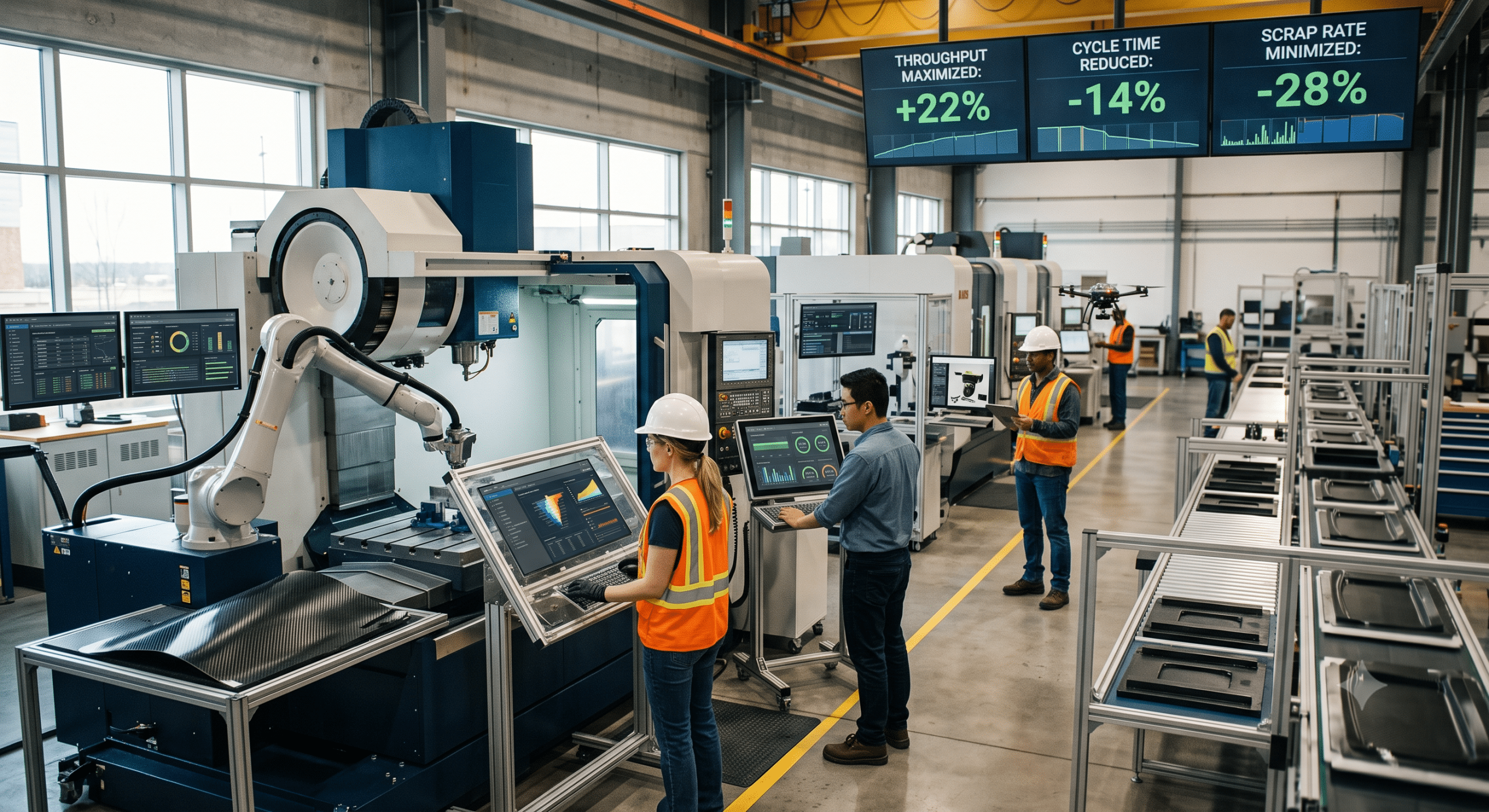
Implementing responsible automation on the modern factory floor ensures that predictive algorithms optimize production without introducing unexpected operational risks. Today, algorithmic decisions govern complex heavy manufacturing systems at millisecond speeds. Precision engineering and high-volume assembly lines now routinely integrate predictive machine learning models. Because of this deep technical integration, the historical definition of operational excellence has completely evolved.
Algorithmic models directly affect three critical operational pillars. They control the raw feed rate of multi-axis CNC machines. Maintenance cycles of critical robotic arms are determined by these calculations as well. Additionally, computer vision setups use them to flag micro-fissures. Therefore, these systems directly impact throughput maximization, cycle time reduction, and scrap rate minimization.
However, deploying an advanced model without a robust framework creates operational volatility. True efficiency requires structural control.
This deep dive reflects the collaborative perspective of a Responsible AI Lead and an AI Governance Manager. It outlines twelve core steps to achieve a stable production environment. We will explore how digital ethics acts as an optimization tool rather than a bureaucratic bottleneck. This approach stabilizes automated systems, unlocks hidden capacity, and eliminates wasted material.
Operational Excellence Through Responsible Automation Guardrails
Many operations managers view compliance as a brake pedal. They believe that adding verification layers inherently slows down production. In consumer software, a faulty recommendation simply causes a misplaced advertisement. On a heavy industrial line, an uncalibrated algorithmic decision causes tool breakages, safety hazards, and catastrophic scrap events.
Industrial AI governance provides structural guardrails. These guardrails allow predictive systems to operate safely at peak performance. Operations teams formalize parameters for how models interact with physical machinery. This step eliminates the erratic swings in automated performance that degrade line efficiency.
Implementing responsible automation creates a highly structured production environment. Edge computers, programmable logic controllers, and cloud-based neural networks operate under clear boundaries.
This structured approach directly addresses the primary drivers of factory efficiency. Throughput increases because systems experience fewer unexpected stoppages. Cycle times decrease because verified safety thresholds optimize machine paths. Scrap rates plunge because early-warning vision systems catch anomalies before raw materials suffer permanent damage.
1. Establishing Multi-Tiered Autonomy Boundaries within Responsible Automation
The first step in stabilizing an assembly line involves defining algorithmic control limits. Unbounded autonomy introduces severe operational risks, while zero autonomy defeats the purpose of smart infrastructure. We utilize a multi-tiered autonomy framework. This system dictates when an AI executes changes independently and when it escalates to a supervisor.
For high-speed tasks like real-time laser sorting, the model operates autonomously within tight parameters. It modifies laser intensity by fractions of a percent to preserve optimal cutting conditions.
If a sensor detects a major anomaly, the required correction might exceed preset limits. In this case, the system shifts to a cooperative mode and surfaces a recommendation to the operator console. Limiting autonomous adjustments protects the facility from sudden, extreme machine movements. This safeguards the floor against mechanical failure and high-volume scrap runs.
2. Real-Time Model Drift Detection to Safeguard Production Cadence
Machine learning models are not static assets. They degrade over time due to a phenomenon known as model drift. In a manufacturing facility, drift occurs when the physical environment changes. Common causes include shifts in ambient factory humidity, new batches of raw materials, or mechanical tool wear. If an AI predicts tool wear based on data from a brand-new machine, its recommendations quickly become inaccurate.
To maintain stable cycle times, the governance framework enforces real-time drift monitoring across all deployment nodes. Automated guardrails trigger an alert when the incoming data distribution shifts away from the baseline training set.
Instead of allowing a degraded model to miscalculate feed rates, the system reverts to a safe fallback profile. This mechanism keeps the line moving at a predictable cadence. Meanwhile, engineering teams validate the new operational context.
3. Computer Vision Validation Matrices for Responsible Automation Inspection
Computer vision systems excel at detecting structural defects at line speeds. They easily catch flaws that remain invisible to the naked human eye. However, an uncalibrated vision model causes operational headaches. It can trigger false positives that halt production unnecessarily, or false negatives that allow defective parts to proceed downstream.
Our chosen responsible automation framework introduces continuous verification loops for inspection models. This strategy relies on automated shadow testing. During this process, engineers periodically inject synthetic defect images into the model’s processing stream. This test verifies that sensitivity thresholds remain accurate.
Ensuring that the vision system correctly identifies simulated flaws prevents accuracy degradation across a shift. This baseline protection eliminates accidental scrap generation and keeps downstream operations clear of defective workpieces.
4. Contextual Metadata Enrichment for Predictive Maintenance Workflows
Predictive maintenance models frequently fail when they analyze sensor data in isolation. An algorithmic model might detect an elevated vibration signature in a robotic spindle. It then prematurely recommends a full line shutdown, which destroys the day’s throughput target. If the model lacks structural context, its prediction of imminent failure remains fundamentally flawed. For instance, the spindle might simply be processing a harder titanium alloy instead of standard aluminum.
To solve this problem, our data architecture pairs raw telemetry with real-time enterprise resource planning data. Combining machine vibrations with active work-order metadata allows the model to understand the structural context of the load.
This approach prevents false alarms and eliminates unnecessary emergency maintenance stoppages. As a result, machinery runs safely through high-priority production windows, which maximizes overall plant throughput.
5. Explainable AI Profiles for Better Algorithmic Floor Management
When an automated system suggests an unexpected process change, operators react with skepticism. For example, the system might recommend reducing conveyor speed by fifteen percent. If the underlying models are opaque, supervisors often ignore the system or turn it off entirely. Operators prefer traditional manual controls over black-box suggestions, which wipes out the efficiency gains of digital transformation.
We require all operational models to output local feature contributions through intuitive operator interfaces. If the system recommends a speed reduction, the screen clearly displays the primary drivers. These drivers might include a localized temperature spike in a motor bearing paired with an uncharacteristic electrical draw.
When operators see the underlying logic behind an advice string, they adopt recommendations quickly. This trust reduces cycle time variations and builds long-term confidence in the automation infrastructure.
6. Strict Role-Based Execution and Governance of Intelligent Agents
Modern industrial networks increasingly employ agentic models. These models interact with multiple manufacturing execution systems to balance production lines automatically. This connectivity improves throughput by dynamically routing parts to open machines. However, it introduces significant operational risk if an agent modifies a validated process parameter without proper clearance.
Our governance protocol maps AI model permissions directly to physical floor roles to enforce responsible automation. An optimization agent supporting a junior operator can only view data and suggest changes.
The same agent gains broader clearance when operating under a master technician’s credential. In this context, it can adjust machine parameters within pre-approved safety limits. This structure prevents unauthorized process alterations. It ensures that all changes occur under appropriate oversight, which keeps scrap rates low and product quality consistent.
7. Deterministic Safety Overrides as a Responsible Automation Safeguard
No matter how advanced a neural network is, its output remains probabilistic. In high-stakes manufacturing environments, relying on probabilistic models for critical safety limits introduces unacceptable risk. If a cloud network connection drops, the system must not behave unpredictably. The same rule applies if an edge device encounters an unexpected data input.
When constructing an ecosystem for responsible automation, every automated assembly line must feature a deterministic, hardcoded safety layer. This layer operates entirely independent of the optimization model. If the predictive algorithm generates an output outside of safe operational limits, a local programmable logic controller intercepts the command.
The controller overrides the model and locks the machinery into a safe state. This intervention prevents equipment damage, maintains production safety, and protects physical assets from severe harm.
8. Synthetic Data Pipelines for Predicting Severe Production Failure
Training an AI model to detect production errors requires historical failure data. However, major mechanical breakdowns and severe component defects are rare in highly optimized factories. If a model trains on unbalanced data containing only nominal operating conditions, it struggles to identify oncoming catastrophic failures. This limitation leads to sudden line stoppages and significant scrap generation.
We utilize synthetic data pipelines powered by advanced simulation tools. These pipelines generate realistic data profiles of rare failure states, such as internal gear fractures or bearing delamination.
Integrating these simulated profiles into the primary training dataset teaches the model to recognize early signs of failure. The system catches these signs long before they manifest on the physical floor. This proactive approach allows facilities to schedule repairs during natural breaks in production, which protects cycle times.
9. Dynamic Line-Balancing and Decentralized Optimization Protocols
Static factory schedules struggle to adapt to unexpected floor disruptions. Common disruptions include sudden machine outages or material delays. This inflexibility creates production bottlenecks, which increase cycle times and leave downstream operators waiting.
Deploying decentralized optimization models at the edge solves this issue. This setup allows individual production cells to communicate with each other directly, sharing real-time information about current cycle times and material needs.
When an upstream machine experiences a slowdown, the edge orchestration system automatically responds. It adjusts the feed rates and tasks of downstream cells to match the current flow.
This real-time balancing prevents material accumulation at bottlenecks. It maintains a steady, continuous throughput across the entire plant floor, maximizing efficiency without requiring manual scheduling overhauls.
10. Immutable Audit Logging for Precise Root-Cause Investigations
When an automated production line experiences an unexpected quality issue, pinpointing the root cause is difficult without detailed records. Engineering teams spend valuable time debating different failure theories if data logs are missing. They might argue whether a failure stemmed from operator error, mechanical issues, or algorithmic miscalculations. This confusion stalls remediation efforts and extends costly downtime.
Our governance framework implements immutable, cryptographic audit logging. The system records every model decision, operator override, and machine response. This complete digital ledger allows engineering teams to conduct precise root-cause analyses following an incident.
By identifying exactly why an issue occurred, teams deploy targeted fixes quickly. This speed reduces diagnostic time, minimizes scrap, and rapidly returns the line to standard operating efficiency.
11. Cross-Functional Governance Committees to Oversee Responsible Automation
Industrial automation projects often stall or introduce operational risks when managed within a single technical silo. For example, a data science team might build a highly accurate model that unknowingly violates local data privacy regulations. The model might also fail to account for critical mechanical limitations of the physical factory machinery.
To maintain a comprehensive strategy of responsible automation, we establish cross-functional AI governance committees. These committees bring together experts from legal, operations, cybersecurity, data science, and plant maintenance.
This group reviews every automation project throughout its operational lifecycle. They ensure that all deployments remain legally compliant, secure, and fully aligned with practical factory floor requirements. This comprehensive oversight streamlines the deployment process and reduces the risk of operational disruptions.
12. Continuous Worker Upskilling and Frontline Feedback Systems
The ultimate success of an automation initiative depends on the workers who interact with the technology daily. If operators feel threatened by an AI system, they find ways to work around it. The same problem occurs if they do not understand how to use it effectively. These workarounds erode the technology’s potential efficiency gains.
True efficiency and responsible automation require a culture of collaboration between human workers and automated systems.
We invest heavily in role-based upskilling programs. These programs train operators to manage, interpret, and challenge automated recommendations confidently. Furthermore, we build structured feedback loops. These loops allow operators to report when a model’s suggestions miss crucial real-world context.
This valuable frontline insight helps engineering teams refine the algorithms continuously. This collaboration improves system performance, shortens cycle times, and fosters an environment where human expertise and automation work together effectively.
Concrete Efficiency Gains: Responsible Automation in Action
To understand the practical value of these strategies, let us examine an industrial assembly facility that integrated these twelve governance pillars. The facility had previously deployed an early predictive maintenance and line-routing model. However, it suffered from frequent false alarms, high scrap rates from uncalibrated vision systems, and regular operator overrides that disrupted cycle times.
By applying these principles of responsible automation, the plant stabilized its automated processes significantly. The implementation of context-enriched data and explainable AI profiles allowed operators to work confidently alongside the automation. This trust reduced total cycle time variations by fourteen percent.
Furthermore, the introduction of validation matrices for the computer vision nodes led to a twenty-two percent drop in the facility’s overall scrap rate within the first two quarters. These operational improvements demonstrate clearly that robust governance is an essential catalyst for maximizing throughput and achieving sustainable floor efficiency.
Driving Long-Term Value Through Responsible Automation Architectures
Deploying automation across an industrial environment requires a delicate balance. Managers must balance the pursuit of speed with the necessity of structural control. Opaque models, unmanaged data drift, and a lack of clear human oversight transform a modern production facility into a source of operational risk. These vulnerabilities lead to costly line stoppages, wasted material, and disrupted schedules.
By embracing responsible automation, manufacturing organizations protect their operations from these digital vulnerabilities while unlocking new levels of efficiency.
A comprehensive governance framework ensures that every algorithm operates within safe, verified boundaries. It turns raw sensor data into meaningful context and empowers frontline workers to make informed decisions. Treating digital ethics and operational control as core design requirements allows industrial enterprises to maximize throughput, shorten cycle times, and maintain a low scrap rate, securing a durable competitive advantage for the future.
Frequently Asked Questions
What does responsible automation mean in an industrial context?
In a manufacturing environment, responsible automation means deploying predictive and autonomous technologies within a structured governance framework that ensures safety, predictability, and compliance while actively optimizing core operational metrics like throughput and scrap reduction.
How does model drift affect factory cycle times?
Model drift occurs when real-world production conditions change over time, causing an uncalibrated model to make inaccurate predictions. This drop in accuracy leads to process errors, unexpected machine behavior, and manual interventions that disrupt and extend cycle times.
Why is explainable AI important for factory operators?
If operators cannot see the reasoning behind an automated recommendation, they will naturally distrust the system and revert to traditional manual overrides, which neutralizes the efficiency and speed benefits of the digital infrastructure.
Can AI governance directly help reduce a facility’s scrap rate?
Yes, by embedding continuous testing matrices into computer vision systems and utilizing context-enriched data streams, governance prevents models from making uncalibrated decisions that lead to defective parts and wasted raw materials.
What role does synthetic data play in industrial automation?
Synthetic data allows engineering teams to simulate rare mechanical failure modes and severe component defects that seldom occur in a well-managed plant, providing the balanced datasets needed to train models to catch oncoming failures early.
How do autonomy boundaries prevent production bottlenecks?
By defining clear limits for when an algorithm can adjust a process independently and when it must escalate to a human, factories eliminate erratic machine movements and unnecessary stoppages, keeping production flowing steadily.
References for Further Reading
-
For an in-depth analysis of how integrated human-machine operating models drive enterprise revenue and margin improvements, read the IBM Thought Leadership Report on AI-Human Operating Models.
-
To learn how manufacturers build operational checkpoints, human-in-the-loop structures, and role-based permissions into production workflows, explore the Tulip Interfaces Manufacturing Governance Guide.
-
To understand state-by-state compliance strategies, biometric data protections, and notice-and-consent matrices for automation tools, see the Ogletree Deakins Factory Floor AI Primer.