
 By Robert Smith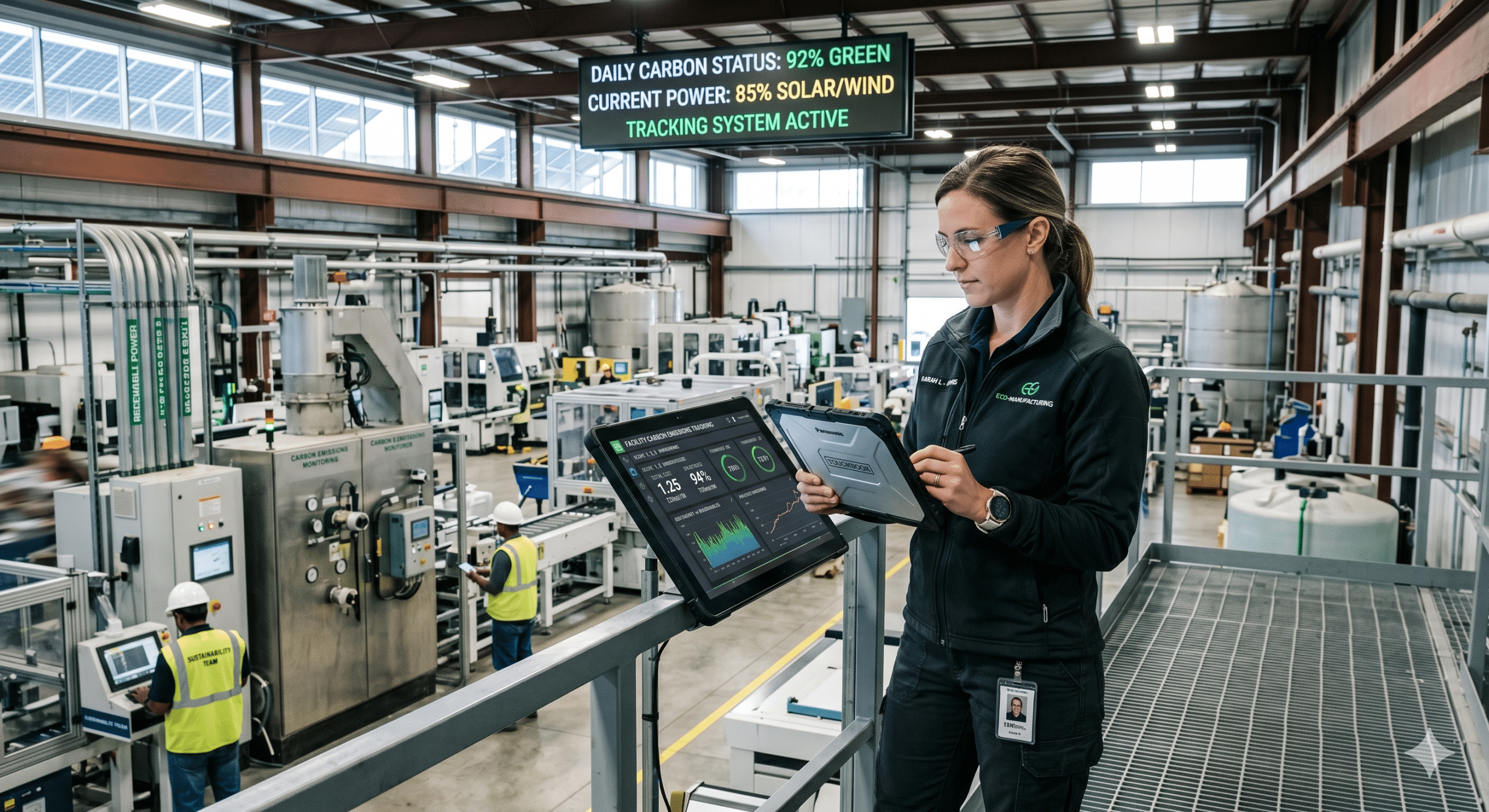
In the past, most industrial companies measured success through production output, machine uptime, labor efficiency, and operating costs. Sustainability was often treated like a side project handled by compliance teams or reserved for annual reports that few employees ever read. Today, that mindset is changing fast.
From manufacturing plants and warehouses to logistics hubs and processing facilities, companies are realizing that sustainability is no longer separate from operational performance. In many ways, it has become part of operational excellence itself. One of the biggest drivers behind this shift is Industrial Carbon Tracking.
Industrial Carbon Tracking is no longer just about counting emissions for government paperwork. It has become a practical business strategy that helps companies uncover energy waste, improve efficiency, strengthen supply chains, reduce operating expenses, and prepare for future environmental regulations. From an industrial engineering perspective, it works much like any performance improvement system. If a business cannot measure where emissions and energy losses are happening, it becomes almost impossible to improve them effectively.
Many plant managers initially assume carbon tracking is complicated, expensive, or only necessary for multinational corporations. In reality, even medium-sized factories are beginning to use carbon data to make smarter decisions. The reason is simple. Carbon emissions are often closely tied to inefficiency. Excess fuel consumption, poor machine maintenance, production bottlenecks, unnecessary transportation, compressed air leaks, and outdated lighting systems all increase both operational costs and carbon output at the same time.
This is why Industrial Carbon Tracking is becoming one of the most important tools in modern industrial sustainability and energy management.
Understanding Industrial Carbon Tracking in Simple Terms
Industrial Carbon Tracking is the process of monitoring, measuring, and analyzing greenhouse gas emissions generated by industrial activities. These emissions typically come from electricity usage, fuel combustion, manufacturing equipment, transportation systems, raw materials, and supply chain operations.
The process helps companies understand where emissions are being created inside their operations and how those emissions connect to daily production activities.
For industrial facilities, emissions are commonly divided into three categories:
Scope 1 emissions come directly from company-owned operations such as boilers, generators, company vehicles, and manufacturing equipment that burn fuel onsite.
Scope 2 emissions are linked to purchased electricity, heating, or cooling used by the facility.
Scope 3 emissions include indirect emissions connected to suppliers, transportation, employee commuting, purchased materials, product distribution, and waste management.
Many companies discover that Scope 3 emissions represent the largest portion of their total carbon footprint because supply chains often consume enormous amounts of energy. According to sustainability guidance from the IMD Business School, understanding emissions across the entire business ecosystem is becoming essential for long-term sustainability planning.
In practical industrial environments, carbon tracking often starts with basic operational data. Energy bills, fuel consumption logs, production schedules, transportation records, maintenance reports, and machine operating hours already contain valuable information. The challenge is organizing that information into a system that reveals patterns and improvement opportunities.
Why Industrial Companies Are Paying Attention Now
Industrial businesses are facing pressure from several directions at once.
Energy costs continue to rise in many parts of the world. Customers increasingly prefer environmentally responsible suppliers. Investors are examining sustainability performance before making financial decisions. Governments are introducing stricter reporting requirements. At the same time, global supply chains are demanding better transparency from manufacturing partners.
What makes Industrial Carbon Tracking especially valuable is that it supports both environmental goals and operational improvements simultaneously.
In manufacturing environments, wasted energy almost always means wasted money. A poorly maintained motor consumes more electricity. An inefficient furnace burns more fuel. Unnecessary transportation routes increase diesel costs. Idle equipment consumes energy without adding production value.
Carbon tracking exposes these hidden inefficiencies.
From an industrial engineering standpoint, this is very similar to lean manufacturing principles. Lean systems focus on identifying waste inside operations. Carbon tracking does the same thing but through an environmental and energy lens.
When companies begin tracking emissions carefully, they often discover issues they never noticed before. Production lines may be consuming far more energy during idle periods than expected. HVAC systems may be operating inefficiently during off-hours. Air compressors may be leaking continuously. Forklift charging schedules may be creating unnecessary peak electricity demand.
These findings can lead directly to measurable cost savings.
Research discussed by Greenly explains that carbon tracking systems are increasingly being used not only for compliance but also for operational decision-making and long-term efficiency planning.
The Connection Between Industrial Sustainability and Energy Efficiency
One of the biggest misconceptions in sustainability is the belief that environmental improvements always require major spending. In reality, many of the most effective sustainability improvements come from reducing wasteful energy consumption.
Factories that improve machine efficiency often lower both emissions and utility bills. Warehouses that optimize lighting systems reduce electricity use while improving worker visibility and safety. Distribution companies that redesign transportation routes lower fuel costs and carbon emissions at the same time.
Industrial sustainability becomes much more practical when businesses stop viewing it as a public relations campaign and start treating it like an engineering optimization process.
For example, many facilities still use aging motors and equipment that consume excessive energy. Upgrading to energy-efficient systems may seem expensive initially, but the long-term savings can be substantial. Predictive maintenance systems can also help identify failing equipment before energy waste becomes severe.
Modern industrial sustainability strategies often include:
Energy-efficient lighting upgrades
Smart building management systems
Variable frequency drives for motors
Predictive maintenance programs
Renewable energy integration
Waste heat recovery systems
Production scheduling optimization
Supply chain efficiency improvements
Real-time energy monitoring
Each of these improvements contributes directly to Industrial Carbon Tracking efforts because they provide measurable reductions in energy consumption and greenhouse gas emissions.
According to insights shared by Werover Sustainability Blog, industrial organizations are increasingly combining predictive maintenance, smart monitoring, and energy optimization technologies to reduce emissions while improving operational resilience.
How Industrial Carbon Tracking Works Inside Real Facilities
In many factories, the first stage of carbon tracking begins with energy monitoring.
Facilities install monitoring systems that collect data from electrical panels, production equipment, boilers, compressors, HVAC systems, and transportation assets. This data is then analyzed to identify patterns, spikes, and inefficiencies.
A manufacturing facility might discover that one production line consumes significantly more electricity than another line producing the same output. Investigation may reveal poorly maintained bearings, motor inefficiencies, or excessive idle running time.
Another company may discover that delivery trucks spend long periods idling during loading operations, wasting fuel unnecessarily.
Carbon tracking transforms these invisible problems into measurable performance indicators.
One of the most important lessons in industrial engineering is that performance improves when measurement becomes consistent and visible. Carbon tracking applies that principle directly to sustainability.
Advanced carbon tracking systems can also integrate supplier data, logistics information, and production planning tools. This creates a broader view of emissions across the entire value chain.
Some businesses are now using carbon dashboards in the same way they use production dashboards. Managers can monitor energy intensity per unit produced, emissions per shipment, or carbon impact by department.
This shift is turning sustainability from a passive reporting activity into an active operational management system.
The Growing Importance of Scope 3 Emissions
Many industrial companies initially focus only on direct emissions from their own facilities. However, supply chain emissions are becoming increasingly important.
Scope 3 emissions include the environmental impact connected to suppliers, purchased materials, transportation providers, waste disposal, and product distribution. For many industries, these indirect emissions represent the largest share of total carbon impact.
This creates new challenges for industrial businesses because sustainability performance now depends heavily on supplier relationships.
Manufacturers are beginning to ask suppliers for emissions data. Procurement teams are evaluating sustainability performance alongside pricing and delivery performance. Logistics companies are exploring cleaner transportation options. Packaging suppliers are developing lower-carbon materials.
According to insights from Carbon Maps Blog, companies are increasingly using product-level carbon footprint analysis to improve supply chain visibility and identify high-impact reduction opportunities.
From an industrial engineering perspective, this trend reinforces the importance of systems thinking. Industrial sustainability is no longer limited to a single factory. It now extends across the entire operational network.
Technology Is Making Carbon Tracking More Practical
A decade ago, carbon tracking often required manual spreadsheets and complex calculations. Today, technology has simplified the process considerably.
Modern carbon tracking software can automatically gather data from utility systems, sensors, production equipment, and enterprise software platforms. Artificial intelligence and analytics tools can identify patterns that would be difficult for humans to detect manually.
Some systems now provide real-time emissions monitoring, allowing facilities to react immediately to inefficiencies.
Cloud-based platforms also make sustainability reporting more accessible for medium-sized companies that previously lacked dedicated environmental departments.
Research highlighted by Plana Earth Academy compares carbon tracking to a GPS system for sustainability because it helps organizations understand where they currently stand and where improvements should be made next.
The rise of Industrial Internet of Things technologies is also transforming industrial sustainability efforts. Sensors can monitor temperature, energy usage, machine vibration, air quality, and fuel consumption continuously.
Instead of reacting to monthly utility bills, companies can now identify problems in real time.
Common Challenges Companies Face
Despite its advantages, Industrial Carbon Tracking is not always easy to implement.
One of the biggest challenges is data quality. Many facilities operate with fragmented systems that store information separately. Energy data may exist in one platform while production data exists somewhere else entirely.
Another challenge is employee engagement. Sustainability initiatives sometimes fail because workers view them as extra administrative tasks rather than operational improvements.
Successful industrial sustainability programs usually involve cross-functional collaboration between engineering, maintenance, production, procurement, logistics, and management teams.
Clear communication is essential. Employees need to understand that carbon tracking is not only about environmental compliance. It also helps improve efficiency, reduce waste, strengthen competitiveness, and support long-term business stability.
Another challenge involves balancing sustainability investments with short-term financial pressures. Some companies hesitate to upgrade equipment because of initial capital costs even when long-term savings are substantial.
Industrial engineers often help bridge this gap by using lifecycle cost analysis to demonstrate how sustainability investments reduce operational expenses over time.
Why Carbon Tracking Is Becoming a Competitive Advantage
Sustainability used to be viewed mainly as a corporate responsibility issue. Today, it is increasingly becoming a competitive advantage.
Customers are asking more questions about environmental impact. Large corporations are requiring suppliers to disclose emissions data. Financial institutions are evaluating sustainability performance when assessing business risk.
Industrial companies that already have reliable carbon tracking systems are often better positioned to respond to these changing expectations.
Transparent carbon reporting can also strengthen customer trust. Businesses that can clearly demonstrate energy efficiency improvements and emissions reductions may gain advantages in bidding processes and long-term partnerships.
This is especially true in industries where global supply chains are under pressure to meet sustainability targets.
The future of manufacturing will likely reward companies that can produce goods efficiently while minimizing environmental impact.
Industrial Carbon Tracking helps businesses move toward that future with measurable data rather than assumptions.
Building a Strong Industrial Sustainability Culture
Technology alone cannot create sustainable operations. Culture matters just as much.
Facilities that achieve meaningful sustainability improvements usually develop a workplace culture where employees actively participate in energy-saving efforts and operational improvements.
Operators often notice inefficiencies before management does. Maintenance teams frequently understand which machines waste the most energy. Logistics staff can identify transportation inefficiencies. Production supervisors may recognize scheduling problems that increase unnecessary energy consumption.
When employees become involved in sustainability initiatives, carbon tracking becomes more than just a reporting tool. It becomes part of continuous improvement.
Industrial engineering has always emphasized process optimization, waste reduction, and system efficiency. Sustainability naturally fits within those same principles.
Instead of treating carbon reduction as a separate environmental objective, successful companies integrate it directly into operational strategy.
The Future of Industrial Carbon Tracking
The future of industrial sustainability will likely become far more data-driven.
Real-time emissions monitoring, artificial intelligence, predictive analytics, and smart automation systems are expected to play larger roles in carbon management.
Governments worldwide are also increasing climate disclosure requirements. Companies that establish strong carbon tracking systems early may adapt more smoothly to future regulations.
Carbon tracking may eventually become as common as quality control systems in industrial operations.
Facilities will likely monitor emissions intensity alongside productivity, defect rates, downtime, and labor efficiency.
From an industrial engineering perspective, this evolution makes sense. Modern operations depend heavily on measurement, optimization, and continuous improvement. Carbon data is simply becoming another critical operational metric.
The companies that embrace this transition early may gain long-term advantages in efficiency, resilience, customer trust, and market competitiveness.
Final Thoughts
Industrial Sustainability & Energy management are no longer optional conversations reserved for environmental conferences or annual corporate reports. They are becoming central parts of modern industrial strategy.
Industrial Carbon Tracking gives businesses the ability to see where energy waste, inefficiency, and unnecessary emissions are occurring across operations. More importantly, it provides actionable information that supports smarter decisions.
The strongest sustainability programs are not built on marketing slogans. They are built on measurement, operational discipline, employee involvement, and continuous improvement.
From an industrial engineering standpoint, Industrial Carbon Tracking represents something very practical. It is a system for identifying hidden inefficiencies, reducing waste, improving operational performance, and preparing industries for a future where sustainability and productivity will increasingly go hand in hand.
Companies that begin tracking carbon seriously today are not only helping the environment. They are building more efficient, resilient, and competitive operations for tomorrow.
Frequently Asked Questions
What is Industrial Carbon Tracking?
Industrial Carbon Tracking is the process of measuring and monitoring greenhouse gas emissions generated by industrial operations such as manufacturing, transportation, energy use, and supply chain activities.
Why is Industrial Carbon Tracking important?
It helps companies identify energy waste, reduce operational costs, improve efficiency, meet sustainability goals, and prepare for environmental regulations.
What are Scope 1, Scope 2, and Scope 3 emissions?
Scope 1 emissions come directly from company-owned operations. Scope 2 emissions come from purchased electricity and utilities. Scope 3 emissions involve indirect emissions from suppliers, logistics, waste, and broader supply chain activities.
Can small and medium-sized factories benefit from carbon tracking?
Yes. Even smaller facilities can reduce energy waste, improve machine efficiency, and lower operational expenses through carbon tracking systems.
How does Industrial Carbon Tracking support energy efficiency?
Carbon tracking identifies areas where energy is being wasted, such as inefficient machinery, idle equipment, compressed air leaks, or excessive fuel usage, allowing companies to improve efficiency.
What industries benefit most from Industrial Carbon Tracking?
Manufacturing, logistics, warehousing, food processing, construction materials, energy production, automotive, and heavy industrial operations can all benefit significantly.
Further Reading
IMD Business School – Carbon Footprint and Business Emissions Guide
Greenly – Features Carbon Tracking Software Should Have
Carbon Maps – Carbon Footprint and Supply Chain Insights
Arbor Climate Insights – Carbon Management Strategies
Plana Earth Academy – What Carbon Tracking Means for Businesses