
 By Robert Smith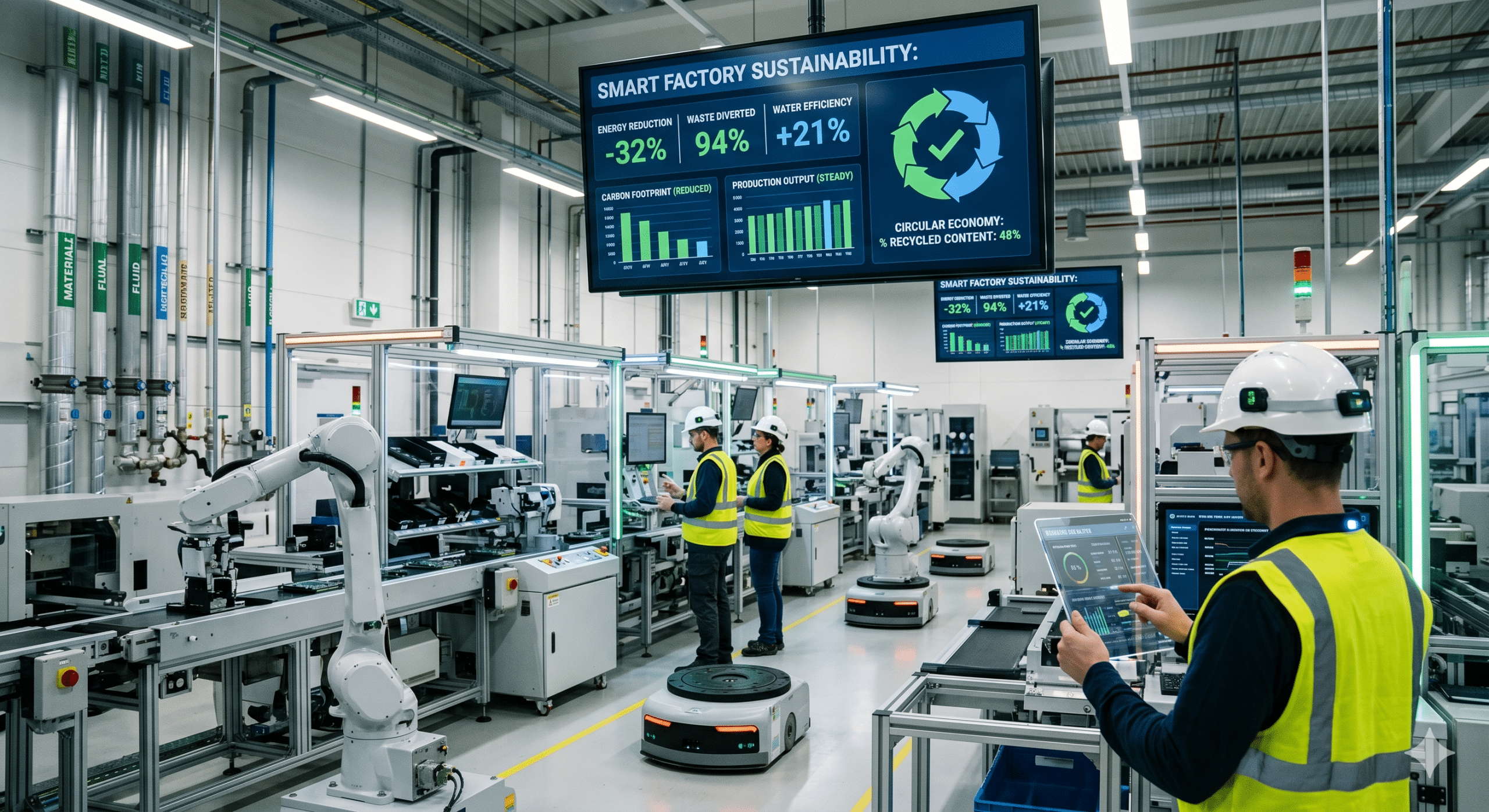
Walk through almost any manufacturing facility today and you will notice something different from even ten years ago. It is no longer only about production output, machine uptime, or reducing defects. Conversations inside factories now include carbon emissions, employee well-being, renewable energy, waste reduction, ethical sourcing, and environmental reporting.
For many people outside the industrial world, this sudden focus on sustainability may seem like another corporate trend. But from the perspective of someone who has spent years around operations, production systems, maintenance planning, process improvement, and factory efficiency, the shift is very real and very necessary.
The manufacturing industry has always consumed enormous amounts of energy and raw materials. Factories power economies, but they also contribute heavily to environmental impact. Today, manufacturers are under pressure from governments, investors, customers, and even employees to operate more responsibly. This is where ESG in Manufacturing has become one of the most important discussions shaping modern industry.
ESG stands for Environmental, Social, and Governance. At first glance, it sounds like corporate terminology designed for boardrooms and annual reports. But inside a factory, ESG translates into practical operational decisions. It affects how equipment is maintained, how energy is consumed, how workers are treated, how suppliers are selected, and how long-term business sustainability is measured.
The factories that understand ESG properly are discovering something important. Sustainability is not slowing operations down. In many cases, it is making operations smarter, leaner, safer, and more profitable.
Why ESG in Manufacturing Matters More Than Ever
Manufacturing has entered a period where efficiency alone is no longer enough. Years ago, success in industrial operations was measured almost entirely by production volume, operating cost, and delivery speed. While those factors still matter, businesses now face additional expectations.
Consumers want transparency about how products are made. Investors are looking closely at sustainability performance before funding companies. Governments are introducing stricter environmental regulations. Major brands are demanding ESG compliance from suppliers. Younger workers also prefer companies that demonstrate ethical and environmental responsibility.
This means ESG in Manufacturing is no longer optional for companies that want long-term survival.
One of the biggest misconceptions about ESG is that it only benefits the environment. In reality, strong ESG practices often improve operational performance. Reducing energy waste lowers utility costs. Better worker safety reduces accidents and downtime. Smarter supply chain management improves reliability. Efficient waste management reduces disposal expenses.
Many industrial engineers already practice ESG principles without realizing it. Lean manufacturing, Six Sigma, preventive maintenance, root cause analysis, and continuous improvement all support sustainability when implemented correctly.
In fact, ESG is simply the next evolution of operational excellence.
According to recent manufacturing sustainability reports, companies are increasingly investing in automation, AI-driven analytics, and smart energy systems to improve both ESG performance and production efficiency.
The Environmental Side of Manufacturing Sustainability
The environmental component of ESG receives the most public attention because manufacturing facilities consume enormous amounts of electricity, water, fuel, and raw materials.
Inside industrial operations, energy loss happens more often than many people realize. Compressed air leaks, outdated motors, poor insulation, inefficient lighting, and unnecessary machine idle times quietly drain money every day.
Years ago, many factories accepted these inefficiencies as normal operating conditions. Today, manufacturers are beginning to treat energy waste the same way they treat material defects. Both are forms of operational loss.
One of the most effective improvements many facilities are making is energy monitoring. Modern manufacturing plants now use smart sensors and energy management systems that track consumption in real time. Instead of waiting for monthly utility bills, engineers can identify which production lines consume excessive power and correct problems immediately.
Factories are also transitioning toward renewable energy sources. Solar installations on factory roofs, battery storage systems, and energy-efficient HVAC designs are becoming increasingly common. Some facilities are redesigning production schedules around off-peak electricity pricing to lower energy costs and reduce grid strain.
Waste reduction is another major area where ESG in Manufacturing creates measurable improvements.
In traditional production environments, scrap and waste were often viewed as unavoidable. However, modern manufacturers are redesigning processes to minimize raw material losses. Better machine calibration, automated quality inspections, and predictive maintenance reduce defective production runs before they become expensive waste problems.
Circular manufacturing practices are also gaining attention. Instead of disposing of materials after a single use, companies are finding ways to recycle, refurbish, or reuse components. This reduces landfill waste while lowering purchasing costs for raw materials.
Research on sustainable manufacturing trends shows that circular economy principles are becoming a core strategy for industrial operations worldwide.
How Smart Technology Supports ESG Goals
Technology is transforming sustainability inside factories faster than many expected.
Industry 4.0 systems are allowing manufacturers to monitor environmental performance with incredible precision. Sensors, automation systems, and machine learning tools can now track production efficiency, emissions, machine health, and energy consumption continuously.
Predictive maintenance is one example where technology directly supports ESG goals.
In older factories, machines were often repaired only after failure occurred. That approach caused downtime, wasted energy, and expensive emergency repairs. Today, predictive systems monitor vibration, temperature, and machine performance data to identify problems before breakdowns happen.
This reduces unnecessary equipment replacement, extends machine life, lowers energy consumption, and minimizes production waste.
Automation is also improving sustainability in surprising ways. Robotic systems can optimize material handling, reduce packaging waste, and maintain production consistency better than manual processes alone.
A recent sustainability study found that intelligent manufacturing programs can significantly improve corporate ESG performance by promoting green innovation and improving resource allocation.
Artificial intelligence is becoming especially valuable in energy optimization. Some advanced systems can automatically adjust factory lighting, cooling, ventilation, and machine scheduling based on operational demand.
These improvements may seem small individually, but in large manufacturing operations, even a 5 percent reduction in energy consumption can save millions annually.
The Human Side of ESG in Manufacturing
While environmental goals receive most headlines, the social component of ESG is equally important.
Factories depend on people. No amount of automation can completely replace skilled technicians, operators, engineers, planners, maintenance teams, and logistics personnel.
Historically, some industrial workplaces prioritized production speed over worker well-being. Fortunately, many companies now understand that healthy, motivated employees contribute directly to operational success.
Worker safety remains one of the most critical ESG responsibilities in manufacturing.
Every industrial engineer understands the real cost of workplace accidents. Injuries do not only affect employees physically and emotionally. They also create downtime, investigations, legal risks, training costs, and operational disruptions.
Strong ESG programs encourage manufacturers to invest heavily in safety systems, ergonomics, training, ventilation, noise reduction, and fatigue management.
Factories are also focusing more on employee development. Companies are investing in technical training, leadership development, and continuous learning opportunities to prepare workers for increasingly automated environments.
Another growing ESG issue involves labor practices throughout global supply chains.
Manufacturers are now expected to evaluate whether suppliers maintain fair wages, ethical sourcing, safe working conditions, and responsible environmental practices.
This is especially important because modern supply chains are deeply interconnected. A company may operate responsibly within its own facility but still face criticism if suppliers engage in unethical practices.
Recent manufacturing sustainability discussions have highlighted growing pressure for fair labor standards and improved worker conditions throughout industrial supply networks.
Governance: The Overlooked Side of ESG
Governance often receives less attention than environmental or social discussions, but it plays a critical role in manufacturing sustainability.
Governance refers to how companies make decisions, manage risks, maintain transparency, and ensure accountability.
In manufacturing, governance includes areas like regulatory compliance, ethical leadership, cybersecurity, anti-corruption policies, and accurate sustainability reporting.
Good governance creates operational stability.
Factories that maintain strong governance systems are usually better prepared for disruptions because they track performance carefully, document procedures properly, and establish clear accountability structures.
Cybersecurity has also become an important ESG issue for manufacturers.
Modern factories rely heavily on connected systems, cloud-based analytics, automation software, and digital supply chains. A cyberattack can shut down production, compromise sensitive data, and create serious financial losses.
Strong governance means protecting operational technology systems while ensuring accurate ESG reporting.
Many companies now publish sustainability reports that include emissions data, workplace safety metrics, diversity goals, and ethical sourcing information. Investors increasingly examine these reports before making business decisions.
This level of transparency forces manufacturers to measure performance more accurately than ever before.
Why ESG Often Improves Profitability
One reason ESG in Manufacturing is growing rapidly is because companies are discovering that sustainability initiatives often improve profitability.
At first, many executives worried ESG programs would simply increase operating costs. Some sustainability investments do require upfront spending, but long-term savings are often substantial.
Energy-efficient equipment reduces utility expenses. Preventive maintenance lowers downtime. Waste reduction improves material utilization. Safer workplaces reduce insurance costs and legal liabilities.
Operational efficiency and sustainability are deeply connected.
For example, if a factory reduces scrap rates by 15 percent, it not only saves raw materials but also reduces transportation costs, disposal fees, storage requirements, and energy consumption.
Similarly, reducing machine idle time improves productivity while lowering electricity use.
This is why industrial engineers play an important role in ESG implementation. Engineers understand process optimization, systems thinking, and continuous improvement methodologies that naturally support sustainability goals.
In many ways, ESG simply encourages manufacturers to eliminate inefficiencies that should have been addressed long ago.
Market research also suggests that ESG-focused manufacturing industries continue growing rapidly worldwide.
The Challenge of Measuring ESG Performance
One of the biggest challenges manufacturers face is measurement.
Unlike production output, ESG performance is not always simple to quantify.
Factories must track emissions, water usage, waste generation, energy efficiency, workplace injuries, employee retention, supplier compliance, and governance metrics. Gathering accurate data across large operations can be difficult.
This is where digital transformation becomes extremely important.
Modern ESG reporting systems collect operational data automatically through connected sensors and software platforms. These systems help companies identify improvement opportunities while simplifying compliance reporting.
Still, many manufacturers struggle with inconsistent standards.
Different industries and regions may use different ESG frameworks, making comparisons complicated. Some companies also face criticism for “greenwashing,” where sustainability claims sound impressive but lack meaningful action.
This is why transparency matters.
Manufacturers that honestly communicate both their progress and challenges tend to build stronger trust with customers, investors, and employees.
Small Manufacturers Face Unique ESG Challenges
Large corporations often dominate ESG conversations because they have bigger budgets and dedicated sustainability teams. However, small and mid-sized manufacturers face unique realities.
Many smaller factories operate on tighter margins. Upgrading equipment, installing renewable energy systems, or implementing digital monitoring tools may seem financially overwhelming.
But ESG does not always require massive investments.
Some of the most effective sustainability improvements are surprisingly simple.
Fixing compressed air leaks, improving preventive maintenance schedules, optimizing lighting systems, reducing material waste, and improving operator training can create meaningful results without huge capital expenses.
Smaller manufacturers also have an advantage many large corporations lack: flexibility.
Smaller operations can often adapt processes faster, implement changes more quickly, and foster stronger employee engagement.
The key is starting with practical improvements instead of chasing perfection immediately.
ESG and the Future of Industrial Careers
The rise of ESG is also changing industrial careers.
Future engineers, plant managers, maintenance leaders, and operations specialists will need sustainability knowledge alongside traditional technical skills.
Modern industrial professionals are now expected to understand carbon reduction strategies, energy management, environmental compliance, and sustainable supply chain planning.
This shift is creating new career opportunities in manufacturing sustainability, energy optimization, ESG reporting, and industrial environmental management.
Universities and technical schools are increasingly integrating sustainability topics into engineering and operations programs because the industry demand continues growing.
The next generation of industrial leaders will likely view sustainability as a normal part of operations rather than a separate initiative.
The Real Future of ESG in Manufacturing
The future of manufacturing will not be defined only by automation or production speed. It will be defined by how efficiently companies balance productivity, profitability, environmental responsibility, and social impact.
Factories that ignore ESG trends risk losing customers, investors, and market competitiveness.
At the same time, companies that approach ESG strategically are discovering enormous opportunities.
The most successful manufacturers are not treating sustainability as a marketing campaign. They are embedding it directly into operations, maintenance planning, supply chain management, and continuous improvement systems.
This shift is transforming factories into smarter, more resilient, and more efficient operations.
As someone with an industrial engineering perspective, one thing becomes increasingly clear. The factories that survive the next twenty years will not necessarily be the biggest factories. They will be the smartest, most adaptable, and most sustainable ones.
ESG in Manufacturing is not replacing operational excellence.
It is redefining what operational excellence actually means.
Frequently Asked Questions About ESG in Manufacturing
What does ESG mean in manufacturing?
ESG in Manufacturing refers to Environmental, Social, and Governance practices within industrial operations. It includes sustainability efforts such as reducing emissions, improving worker safety, ethical sourcing, energy efficiency, waste reduction, and transparent business practices.
Why is ESG important for manufacturers?
ESG helps manufacturers improve operational efficiency, reduce environmental impact, meet regulatory requirements, attract investors, and strengthen customer trust. Many companies also experience long-term cost savings through energy efficiency and waste reduction.
How can factories reduce energy consumption?
Factories can reduce energy usage by upgrading inefficient equipment, implementing preventive maintenance, using smart energy monitoring systems, improving insulation, optimizing machine scheduling, and transitioning toward renewable energy sources.
Does ESG increase manufacturing costs?
Some ESG initiatives require initial investment, but many reduce long-term operational costs. Energy savings, lower waste generation, improved safety, and better maintenance practices often create measurable financial benefits over time.
What role does technology play in ESG in Manufacturing?
Technology helps manufacturers track emissions, monitor energy use, optimize machine performance, reduce waste, and improve reporting accuracy. Smart factories use automation, sensors, predictive maintenance, and AI-driven analytics to support sustainability goals.
What are common ESG challenges for manufacturers?
Manufacturers often struggle with data collection, reporting standards, supply chain transparency, equipment upgrade costs, regulatory compliance, and balancing sustainability goals with production demands.
Final Thoughts
Sustainability is no longer a side conversation in manufacturing. It is becoming part of the operational foundation of modern industry.
The companies leading the future are not waiting for regulations to force change. They are proactively improving energy efficiency, strengthening worker safety, investing in smarter technology, and building more resilient supply chains.
For industrial professionals, ESG is not simply about public image or corporate responsibility reports. It is about creating manufacturing systems that waste less, perform better, adapt faster, and remain competitive for decades to come.
The future factory will not only produce products efficiently.
It will produce them responsibly.
Further Reading
- Nexio Projects – ESG Leadership for Manufacturers
- Manufacturers Alliance – ESG in Manufacturing 2025
- Third Partners – Guide to Sustainable Manufacturing
- Tracera – ESG in Manufacturing Explained
- Nature – Intelligent Manufacturing and ESG Research