
 By Robert Smith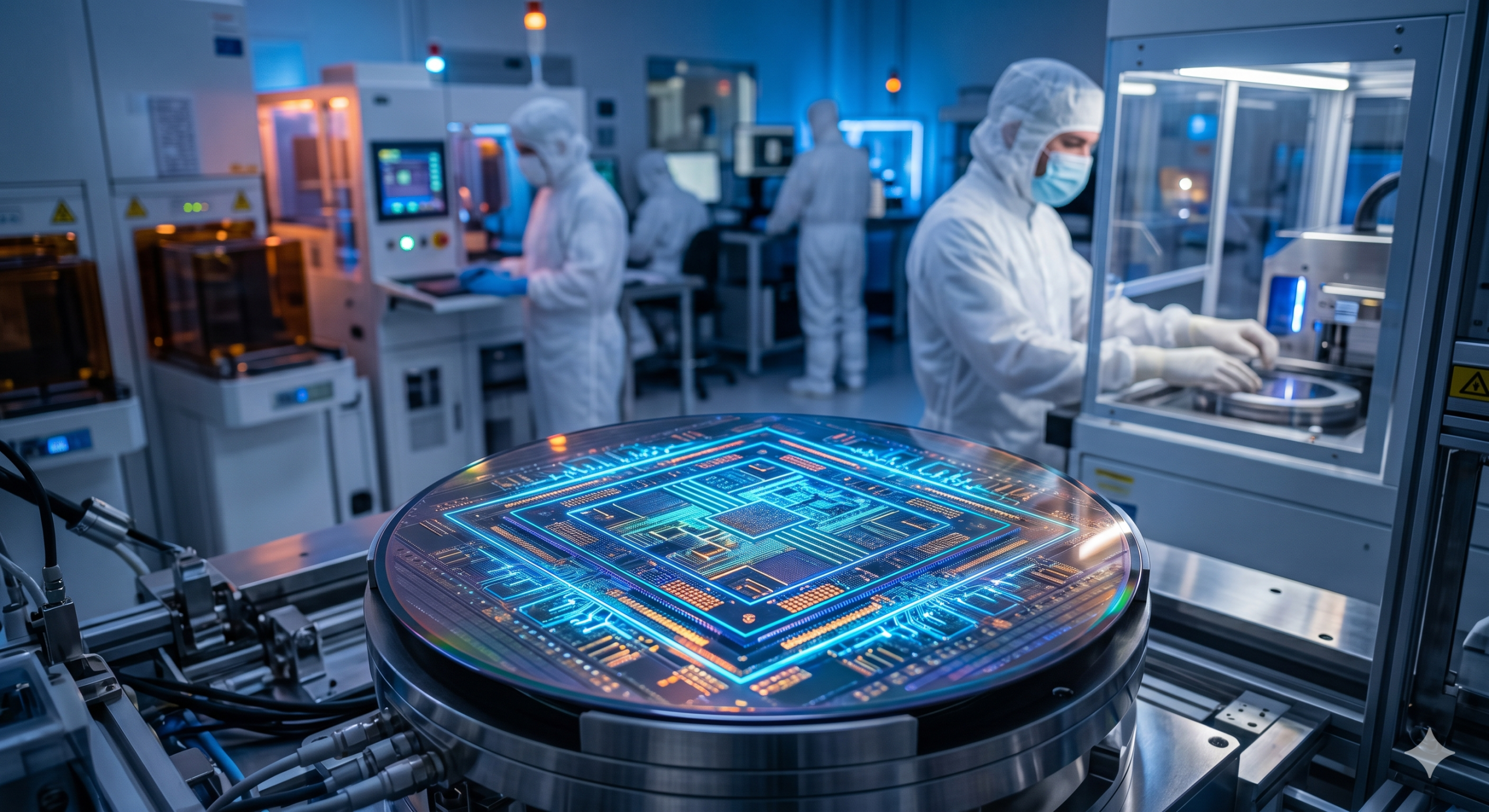
Semiconductor tech continues to power the modern world in ways that are both visible and invisible. Today, nearly every device—from smartphones to advanced medical equipment—relies on semiconductor technology to function efficiently. As a result, understanding how semiconductors work is essential for anyone interested in technology, innovation, and the future of digital systems. Moreover, as industries rapidly evolve, semiconductor advancements are driving new breakthroughs in artificial intelligence, automation, and connectivity. Therefore, this guide explores semiconductor tech in 2026 with a clear, informative, and expert perspective.
What Is Semiconductor Tech?
Semiconductor tech refers to the study, design, and application of materials that have electrical conductivity between conductors and insulators. In particular, silicon is the most widely used semiconductor material due to its stability and efficiency. Additionally, semiconductors are essential for building integrated circuits, which power nearly all electronic devices.
Simply put, semiconductors can control electrical current. Because of this, they are ideal for creating transistors—the tiny switches that enable digital processing. In fact, modern chips can contain billions of transistors within a very small area. Consequently, devices have become faster, smaller, and more energy-efficient over time.
How Semiconductors Work
To understand semiconductor tech, it is important to examine how these materials control electricity. First, engineers use a process called doping to introduce impurities into pure silicon. As a result, the electrical properties of the material change.
There are two main types of doped semiconductors:
- N-type semiconductors, which have extra electrons
- P-type semiconductors, which have “holes” or missing electrons
When combined, these materials form a p-n junction. This junction, in turn, allows current to flow in a controlled manner. Therefore, it becomes the foundation of diodes, transistors, and integrated circuits.
Ultimately, this precise control of electrical flow enables semiconductors to perform logic operations, process data, and store information. Without a doubt, this is what makes modern computing possible.
The Evolution of Semiconductor Technology
Semiconductor tech has evolved significantly over the past decades. Initially, early transistors were large and limited in capability. However, continuous innovation has led to smaller, faster, and more powerful chips.
For example, Moore’s Law predicted that the number of transistors on a chip would double approximately every two years. Although this trend has slowed in recent years, innovation has not stopped. Instead, companies are exploring new ways to improve performance.
Key Milestones
- 1970s: Introduction of microprocessors
- 1990s: Growth of personal computing
- 2010s: Expansion of mobile and cloud technologies
- 2020s: Rise of AI and advanced chip architectures
Currently, semiconductor manufacturers are developing chips at 3nm and even 2nm scales. As a result, devices are becoming more powerful while consuming less energy.
Types of Semiconductor Devices
Semiconductor tech supports a wide range of devices. Each type, in particular, serves a specific function in electronic systems.
1. Microprocessors (CPUs)
Primarily, CPUs handle general computing tasks. In other words, they act as the brain of a device.
2. Graphics Processing Units (GPUs)
Originally, GPUs were designed for graphics rendering. However, they are now widely used in AI and machine learning.
3. Memory Chips
For instance, RAM provides temporary storage, while NAND flash offers long-term storage. Together, they manage data efficiently.
4. Power Semiconductors
Importantly, these components regulate power in systems such as electric vehicles and renewable energy solutions.
5. Analog and Mixed-Signal Chips
Unlike digital chips, these process real-world signals like sound and temperature. Therefore, they are essential for sensors and communication systems.
Semiconductor Manufacturing Process
The manufacturing process of semiconductors is highly complex. To begin with, it requires ultra-clean environments known as fabrication plants or fabs. Furthermore, even the smallest contamination can affect chip performance.
Key Steps in Manufacturing
- Wafer Production
First, pure silicon is shaped into thin wafers. - Photolithography
Next, patterns are projected onto the wafer using light. - Etching and Doping
Then, materials are added or removed to create circuits. - Deposition
Afterward, thin layers of materials are applied. - Testing and Packaging
Finally, chips are tested and prepared for use.
Overall, this process requires precision, advanced technology, and significant investment. In fact, modern fabs can cost billions of dollars to build.
Key Trends in Semiconductor Tech (2026)
In fact, recent insights on semiconductor technology trends in 2026 highlight how innovations like edge AI and chiplet architecture are reshaping the industry. Semiconductor tech continues to evolve rapidly. In 2026, several trends are shaping the industry.
1. AI-Driven Chip Design
Increasingly, artificial intelligence is being used to design chips. As a result, development cycles are faster and more efficient.
2. Chiplet Architecture
Instead of building a single large chip, manufacturers use smaller chiplets. Consequently, production becomes more flexible and cost-effective.
3. 3D Stacking
Additionally, chips are stacked vertically to improve performance. This approach, in particular, increases density without expanding size.
4. Advanced Materials
While silicon remains dominant, materials like gallium nitride are gaining popularity. Therefore, high-power applications are becoming more efficient.
5. Edge Computing
At the same time, semiconductors are enabling real-time processing at the edge. This means faster responses and reduced latency.
Applications of Semiconductor Tech
Semiconductor tech is used across many industries. In fact, it is nearly impossible to find a sector that does not rely on it.
Consumer Electronics
For example, smartphones and laptops depend heavily on advanced chips.
Automotive Industry
Today, vehicles use semiconductors for safety, navigation, and automation. As a result, driving experiences are smarter and safer.
Healthcare
Similarly, medical devices rely on semiconductors for accurate diagnostics.
Telecommunications
With the rise of 5G, semiconductor demand has increased significantly. Therefore, faster communication is now possible.
Industrial Automation
In addition, factories use semiconductor-powered systems to improve efficiency and productivity.
Challenges Facing the Semiconductor Industry
Despite its growth, the industry faces several challenges. On the one hand, demand is increasing rapidly. On the other hand, supply constraints remain a concern.
Key Challenges
- Supply Chain Disruptions: Recently, global events have exposed vulnerabilities.
- Rising Costs: Moreover, building advanced fabs is extremely expensive.
- Geopolitical Issues: At the same time, competition between countries is intensifying.
- Environmental Impact: Importantly, manufacturing processes consume significant resources.
Therefore, companies must innovate not only in technology but also in sustainability.
The Future of Semiconductor Tech
Looking ahead, semiconductor tech will continue to evolve. In particular, several emerging innovations are worth noting.
Quantum Computing
Although still in development, quantum chips could revolutionize computing.
Neuromorphic Chips
Interestingly, these chips mimic the human brain. As a result, AI systems may become more efficient.
Flexible Electronics
Meanwhile, flexible semiconductors are enabling wearable technology.
Sustainable Manufacturing
Finally, companies are focusing on eco-friendly production methods. Consequently, the environmental impact may be reduced.
Why Semiconductor Tech Matters More Than Ever
Semiconductor tech is no longer just a component of devices. Instead, it is a critical driver of global innovation. From artificial intelligence to smart cities, semiconductors are shaping the future.
In conclusion, the importance of semiconductor technology cannot be overstated. As technology continues to advance, semiconductors will remain at the center of progress. Therefore, staying informed about semiconductor tech is essential for businesses, professionals, and consumers alike.