Last month a plant manager called me on a Tuesday night, which is usually when the real calls come in. His company runs two shifts, employs about 180 people, makes three product families, and has a packaging line that had quietly become the bottleneck of the whole building. He was about to make his first serious industrial automation purchase, with three quotes on his desk for a palletizing robot, and he wanted me to tell him which one to sign. I asked him how many minutes per shift that line actually ran. He didn’t know. Neither did his maintenance lead. That was the real starting point, and it had nothing to do with robots.
I have spent most of my career designing and integrating industrial automation for plants that are too big to run on clipboards and too small to have a corporate engineering department behind them. That middle ground is where I think the most interesting work in manufacturing is happening right now. It is also where the most money gets wasted. This piece is my honest take on where a midsized plant should start in 2026. I wrote it for the operations director, the plant manager, or the owner who keeps hearing that everyone else is automating and wonders whether they are already behind.
Why 2026 Feels Different for Industrial Automation
For years the conversation was mostly hypothetical. Vendors showed demo videos, consultants (myself included) talked about Industry 4.0, and most plants ran a pilot or two that died quietly when the internal champion left for another job. That phase is ending.
Rockwell Automation’s latest State of Smart Manufacturing report surveyed more than 1,500 manufacturers across 17 countries, and it found that 59 percent of manufacturers now actively use smart manufacturing technologies to support operations, while only 18 percent remain in pilot mode. The robotics numbers tell the same story. According to the International Federation of Robotics, the global operational stock of industrial robots climbed 9 percent to a record 5 million units in 2025, on the back of an 11 percent jump in annual installations to more than 600,000 new units. In the United States, installations rose 11 percent to about 38,000 units, with the recovery driven largely by the food industry and other sectors beyond classic manufacturing, while automotive stayed the single biggest adopter.
That last detail matters a lot to midsized plants. Industrial automation is no longer something only car makers and giant electronics assemblers can justify. The equipment costs less than it did ten years ago, the software is far friendlier, and the integrator market has matured to the point where a 150 person plant can get serious, competent help.
The Labor Gap Is Forcing the Issue
The other force pushing everyone is labor. A Deloitte and Manufacturing Institute study estimates US manufacturing could need as many as 3.8 million workers between 2024 and 2033, and that 1.9 million of those jobs could go unfilled if workforce challenges aren’t addressed. When I sit down with plant leaders, staffing is almost always the first or second thing they bring up. Not cost per part. People. Who is going to run the third shift? Who replaces the setup tech retiring next spring?
So yes, 2026 is different. But “different” doesn’t mean “buy something now.” It means the cost of doing nothing has gone up, and so has the cost of doing the wrong thing.
The Industrial Automation Mistake I See Most Often: Buying the Robot First
Back to the plant manager with three quotes. Every quote was technically sound. Each integrator had done its job well. What none of them could know was that the packaging line lost most of its time not at the palletizer but at changeovers upstream, where operators were hunting for the right film rolls and adjusting guides by feel. A palletizing robot would have stacked boxes beautifully during the 55 percent of the shift the line was actually running. The other 45 percent would have stayed exactly the same.
This is the pattern I see more than any other. A plant identifies a symptom (“we need more output,” “we can’t find people”), a vendor offers a machine that addresses the symptom, and nobody measures the actual constraint. The robot goes in, the numbers barely move, and leadership concludes that industrial automation “doesn’t work for a shop our size.” It works fine. It was just pointed at the wrong problem.
My first piece of advice is boring and unglamorous: don’t start with hardware. Start by knowing exactly where your time goes.
Step One: Map the Pain Before You Price the Hardware
Before I recommend anything to a client, I want three things.
First, a value stream walk with the people who actually run the equipment. Not the org chart version. I want to stand at each station with an operator and ask what slows them down, what they’d fix if they owned the place, and what they quietly work around every shift. Operators know where the problems live. They rarely get asked.
Second, a rough downtime picture. It doesn’t need to be perfect. Two weeks of handwritten logs sorted into planned stops, changeovers, breakdowns, starved, blocked, and quality holds will tell you more than most ERP reports ever will.
Third, a ranked list of tasks that are dull, dirty, dangerous, or simply impossible to staff. These are often where automation earns its keep fastest, because the alternative isn’t a cheaper human. It’s an empty station and a missed shipment.
When you lay those three side by side, the starting point usually becomes obvious. Sometimes it’s a robot. Often it’s a sensor, a quick change fixture made in house through industrial 3D printing, a barcode scanner at receiving, or a better HMI screen. I once watched a $9,000 vision check outperform a six figure robotic cell on payback, simply because it caught a labeling defect that was putting a major customer relationship at risk.
Step Two: Build Your Industrial Automation Plan on Machine Data
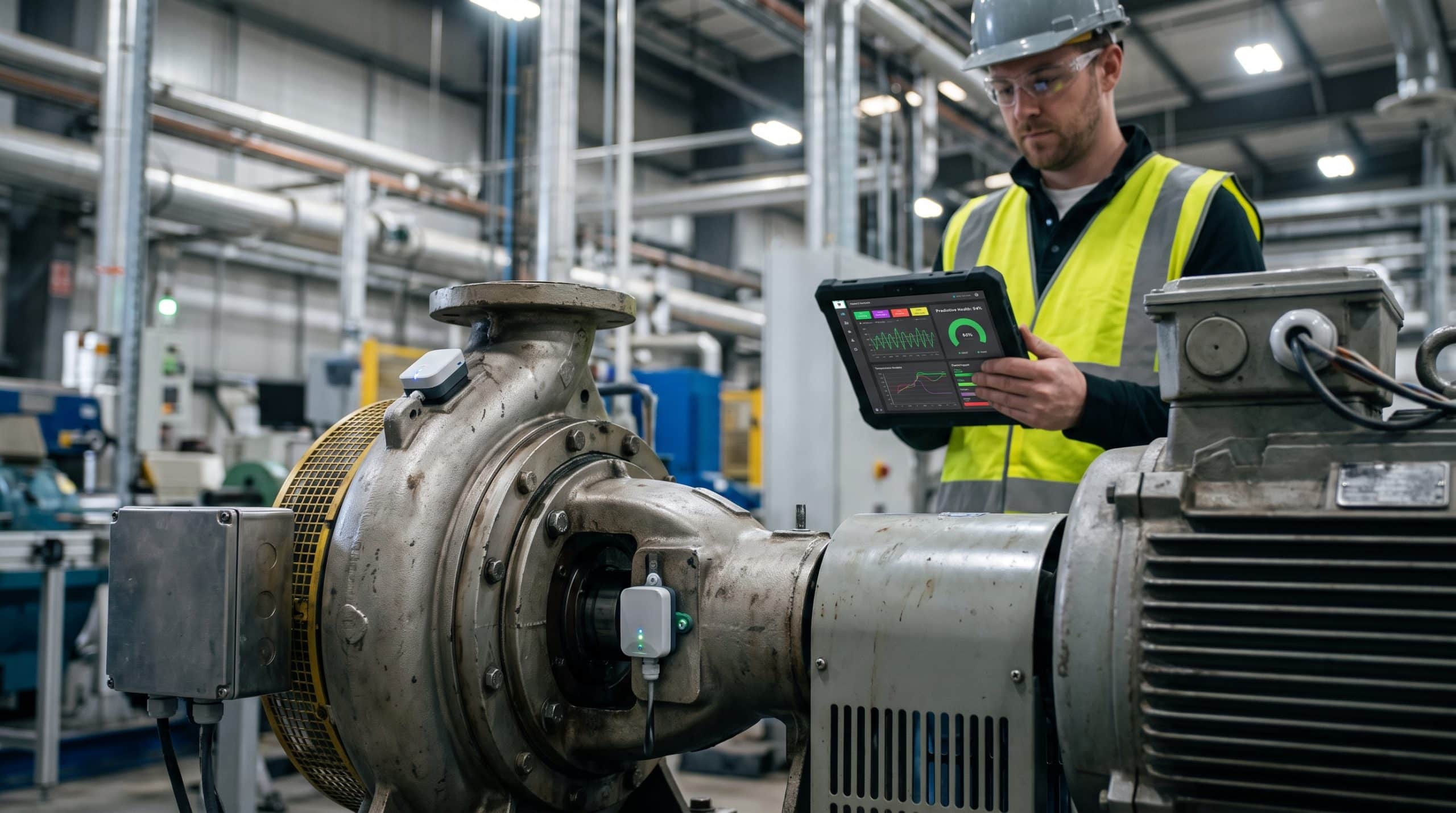
If I had to name the most underrated first move in industrial automation for midsized plants, it would be connecting the machines you already own and actually reading what they tell you.
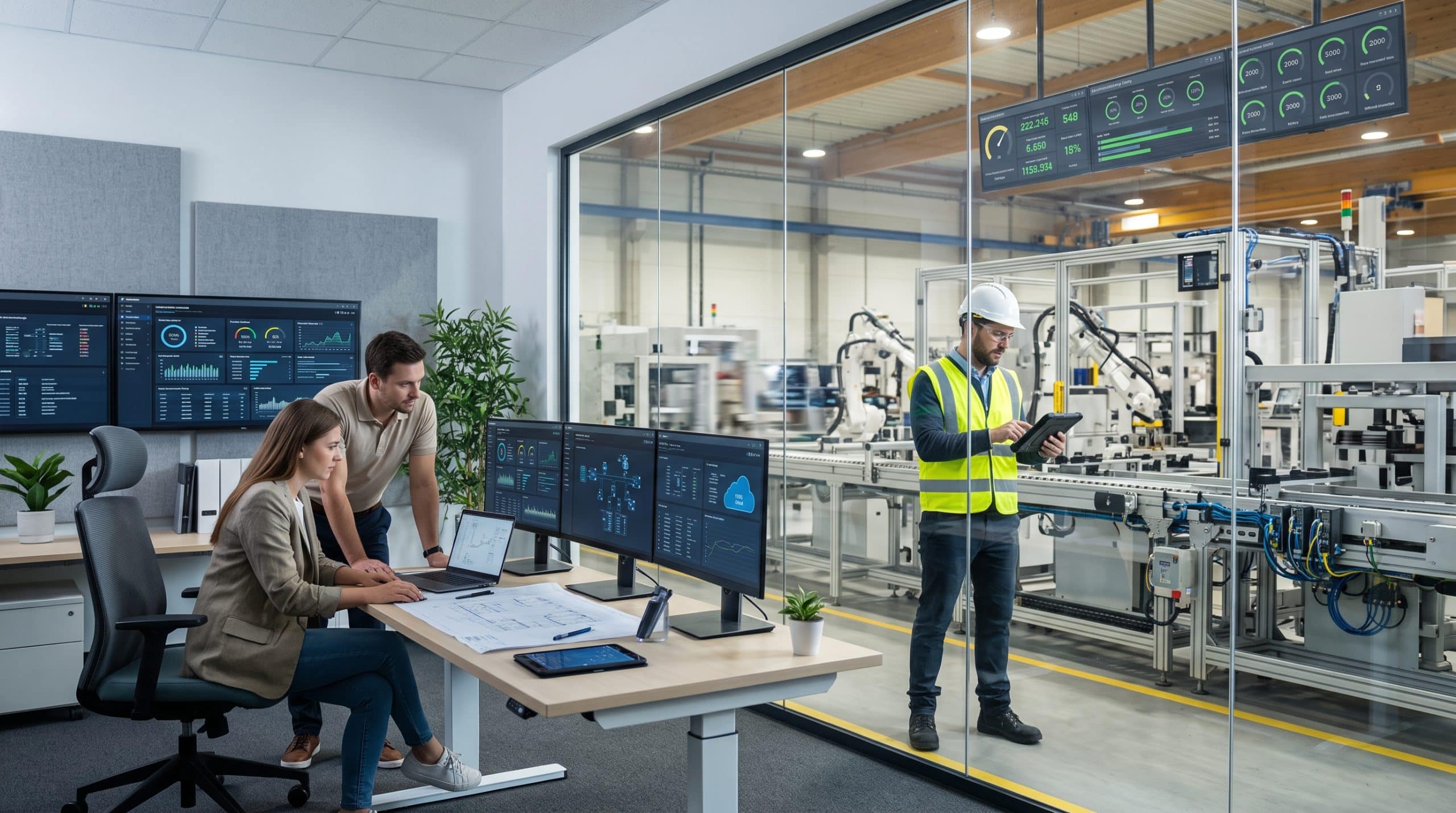
Most plants already have PLCs that know cycle counts, fault codes, and run states. That information sits locked inside the controller, or it shows up on a local screen that nobody records. Pulling it out through OPC UA or MQTT into a simple dashboard costs a fraction of any new equipment, and the effect on decision making is enormous. Suddenly the argument about why second shift underperforms has numbers behind it instead of opinions.
A word of caution, though. I’ve walked into plants with years of historian data and no one assigned to look at it. Collecting data isn’t the win. Using it is. The goal isn’t a data lake. The goal is answering three questions every morning: what ran, what stopped, and why. Build toward OEE (overall equipment effectiveness) if you like, but even tracking availability alone is a huge step up from gut feel. Better still, route those fault codes into your CMMS so recurring stops turn into work orders instead of folklore.
For older equipment, you can retrofit current sensors or simple IO modules onto machines that have no networking at all. I’ve connected presses from the 1990s using a few hundred dollars of hardware and a tap on the stack light. You don’t need to replace a machine to learn from it.
Step Three: Pick One Cell, Not the Whole Plant
Once you can see where your time goes, pick one cell. Just one. I choose it with every client using four criteria:
- The problem is measurable today, so you’ll be able to prove the improvement later.
- The process is stable. Automating a chaotic process just gives you faster chaos.
- The people in that area want the change, or at least aren’t hostile to it.
- If it fails, it won’t shut down the plant. Your first project is also your learning project.
Plants want to go big because the business case for a full line looks better on a spreadsheet. I understand the temptation. But the first industrial automation project is where your team learns how to write a specification, how to run a factory acceptance test, how to train operators, and how to support a system at 2 a.m. when the integrator isn’t answering. You want to learn those lessons on a cell, not on your entire packaging department.
When the first cell works, the second one goes in faster and cheaper because your team now knows what good looks like. I’ve watched plants go from one cell to five in eighteen months that way. I’ve also watched plants that tried to do five at once spend two years firefighting.
Where Cobots, Vision, and AI Fit in Industrial Automation
Let me get specific about the technologies everyone asks me about.
Collaborative Robots
Cobots are excellent for tending CNC machines, simple pick and place, packing, and screwdriving, especially in high mix, low volume shops where you’ll move them between jobs. They aren’t magic. They run slower than traditional industrial robots, and “collaborative” describes the application, not the robot. A cobot swinging a sharp part at speed still needs a proper risk assessment. Treat the safety evaluation as real engineering, not a sticker on the arm.
Machine Vision
Vision has become remarkably accessible. Smart cameras with built in inspection tools let a capable technician set up presence checks, label verification, and basic dimensional checks without a specialist on site. For many midsized plants, vision is a better first project than a robot, because quality escapes are expensive and the installation footprint is small.
Artificial Intelligence
This is where I’d encourage skepticism and curiosity in equal measure. Interest is real. In Rockwell’s findings for Australia and New Zealand, AI and machine learning topped the list of smart manufacturing capabilities driving the biggest business outcomes. In practice, the AI that pays off for midsized plants right now is narrow and focused: predictive maintenance through anomaly detection on motor current or vibration, vision models that handle natural variation traditional rules can’t, and scheduling tools that juggle constraints better than a whiteboard ever could. Every one of those depends on clean data from Step Two. If you skipped that step, AI has nothing useful to learn from.
Autonomous Mobile Robots
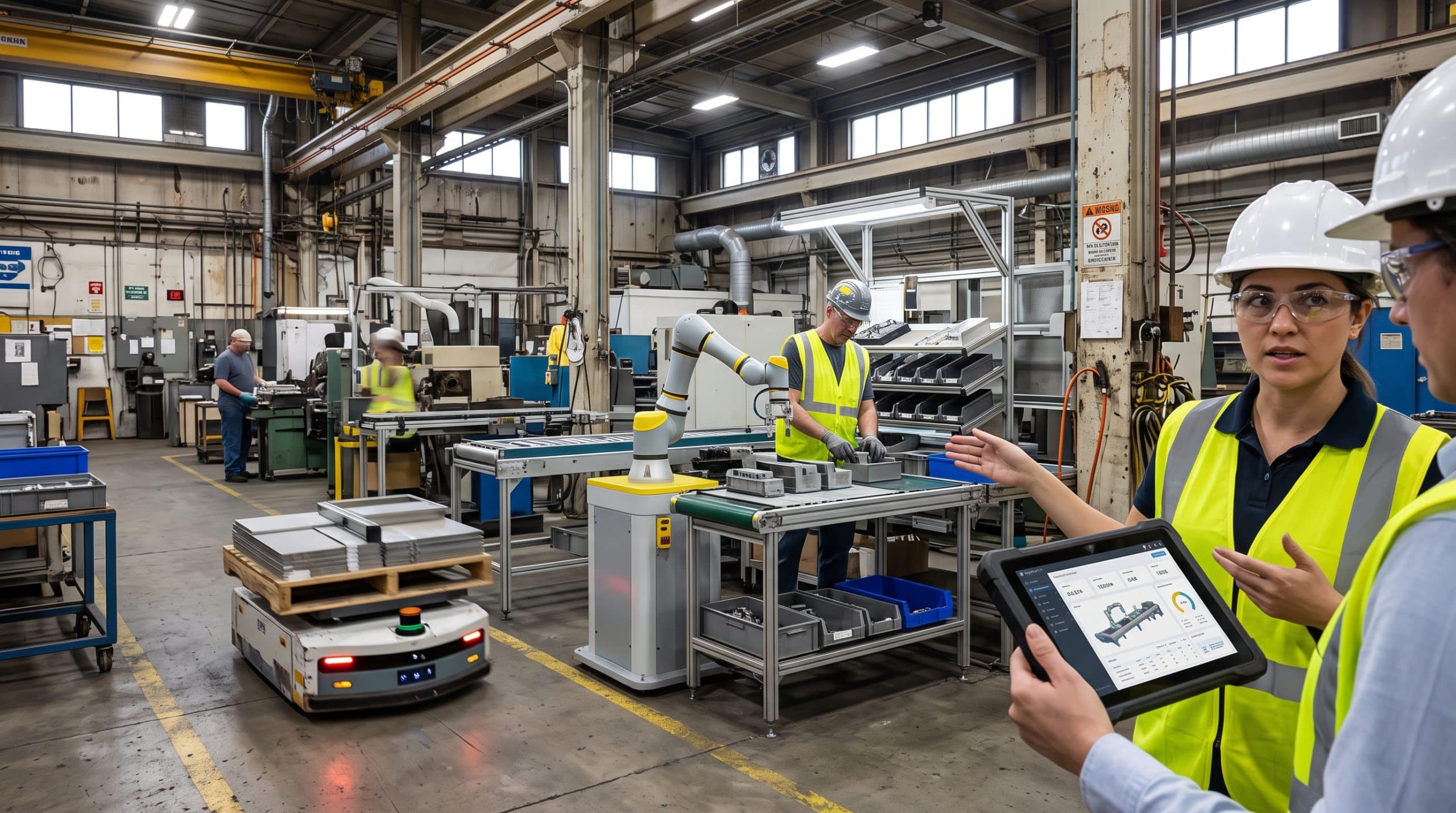
If your forklifts and carts spend hours each shift moving work in progress between departments, AMRs can be a quiet win. Just check your floor condition, aisle widths, and how often your layout changes before you fall in love with the demo.
The Industrial Automation Cost Nobody Budgets For
Here’s a reality that surprises a lot of owners: on a typical robotic cell, the robot arm itself is often a third of the total project cost, sometimes less. The rest goes to end of arm tooling, guarding, conveyors, controls, programming, integration with your existing systems, installation, and training. Many integrators now refine grippers through rapid prototyping and produce the final versions with additive manufacturing, which can trim that tooling line.
That isn’t padding. That’s engineering. But it means you should evaluate integrators as carefully as you evaluate equipment. These are the questions I’d ask any integrator before signing:
- Show me two projects similar in size and process to mine, and let me call those customers directly.
- Who on your team supports this after commissioning, and what does a service call cost?
- Will I receive full, unlocked source code and complete documentation?
- How will this cell communicate with my existing PLCs, MES, or ERP?
- What does my maintenance team need to learn, and is that training included in the quote?
Question three is a deal breaker for me. Locked code turns a capital project into a permanent subscription to one vendor.
Standardize Your Controls Platform
I’d also push you to standardize. If your plant already runs mostly on one controls platform, think hard before adding another. Every extra brand means another set of software licenses, spare parts, and skills your team has to maintain. Mixed estates are common and perfectly manageable, but the choice should be deliberate, not an accident of whichever quote came in lowest.
Cybersecurity Belongs in Every Industrial Automation Project
Every time you connect a machine, you open a door. For decades, plant floor networks were protected mostly by being isolated. That isolation disappears the moment you add remote support access, a cloud dashboard, or a vendor’s VPN connection.
The framework I lean on is the ISA/IEC 62443 series. These standards define requirements and processes for implementing and maintaining electronically secure industrial automation and control systems, and they give you a way to assess security performance. The idea in it that resonates most with my clients is that shared responsibility is treated as a founding principle of automation cybersecurity. The plant, the integrator, and the equipment supplier each carry part of the load.
A midsized plant doesn’t need to chase certification to benefit. Start with the basics of OT cybersecurity: separate the plant network from the office network, keep an inventory of every connected device, control remote access with individual accounts and logging, and make sure your integrator’s contract spells out who patches what and when. Write these requirements into the specification for your very first project, so you never have to bolt them on later at twice the cost.
People Decide Whether Industrial Automation Sticks
I have never seen an automation project fail because the robot couldn’t do the job. I’ve seen plenty fail because the people around it weren’t brought along.
Operators worry about being replaced. Maintenance techs worry about being blamed when something they’ve never been trained on breaks at midnight. Supervisors worry about their numbers during the ramp up. All of those worries are reasonable, and ignoring them is how you end up with a cell that’s “down for adjustments” half the time.
Here’s what works. Involve operators in the cell design from the first meeting. Name a technical owner from your own team and send them to training before the install, not after. Be honest about what happens to the roles being automated, which in most midsized plants means redeployment to work you couldn’t staff anyway. And celebrate the first win in front of everyone.
There’s a retention angle here too. Deloitte research found employees are 2.7 times less likely to leave within 12 months if they feel they can build skills that matter for the future. A well run industrial automation program can be a reason people stay, not a reason they leave.
A Realistic 12 Month Industrial Automation Roadmap
Here’s what a sensible first year looks like for a typical midsized plant with one or two engineers and a stretched maintenance team:
- Months one and two: Walk the value stream, collect downtime data, and interview operators. Build a ranked list of opportunities.
- Months two through four: Connect your most critical machines and put up a simple production dashboard. Review it daily in the morning meeting.
- Months four and five: Choose your first cell using the four criteria above. Write a functional specification with your integrator that includes cybersecurity and documentation requirements.
- Months five through eight: Build the cell, run factory acceptance testing at the integrator’s shop with your own operators present, then install and commission.
- Months eight through ten: Stabilize. Expect a dip during ramp up. Track performance against your baseline every week.
- Months ten through twelve: Document lessons learned, calculate actual payback, and select project number two.
Use Outside Support Where You Can
If public support is available to you, use it. In the US, the NIST Manufacturing Extension Partnership exists for exactly this situation. According to NIST, small and medium manufacturers make up 98 percent of the US manufacturing base, and the agency has funded 12 MEP centers with a specific mandate to help these firms adopt AI, robotics, automation, and additive manufacturing. An MEP technology assessment is an inexpensive way to get an outside opinion before you commit serious capital. Alongside that, a partner offering manufacturing IT services can handle the network and support side your small team may not have time for.
How to Judge Industrial Automation Payback Without Fooling Yourself
Most automation business cases I review are too optimistic in the same three ways. They assume full uptime from week one. They count labor savings for positions that were never actually going to be eliminated. And they ignore the cost of support once the warranty ends.
A more honest approach looks like this. Model payback with a realistic ramp; I use 60 to 70 percent of target performance for the first quarter. Count labor as capacity gained rather than heads removed, if that’s the truth in your plant. Include a yearly budget for support and spare parts. Then add the benefits spreadsheets tend to miss: fewer injuries, more consistent quality, the ability to accept orders you’d otherwise turn away, and the plain fact that filling a station you couldn’t staff has real value.
For most midsized plants, I like first projects that pay back in under two years on those conservative assumptions. If a project only works at 95 percent uptime from day one, it doesn’t work.
So, Where Should a Midsized Plant Start?
If you skipped to the end, here’s the short version. Industrial automation in 2026 is mature, affordable, and genuinely necessary for plants that can’t hire their way to growth. But the starting point is rarely the shiny machine. Start by seeing your operation clearly. Connect what you already have. Pick one well chosen cell. Buy integration and support as carefully as you buy equipment. Build security into the specification. And bring your people with you from day one.
As for the plant manager with three quotes, we spent six weeks on data collection and changeover fixtures before revisiting the palletizer. The line’s run time climbed enough that the robot became a much easier decision, and it went in the following quarter. Same robot. Very different result.
Frequently Asked Questions
What is industrial automation in simple terms?
Industrial automation is the use of control systems such as PLCs, robots, sensors, vision systems, and software to run industrial processes with less manual effort. It ranges from a single sensor that stops a machine on a fault to fully automated production lines. For a look at how manufacturers are using it today, see the 2026 State of Smart Manufacturing report summary.
Where should a midsized plant start with industrial automation?
Usually not with the most expensive thing on the wish list. Start by connecting existing machines to see where time is actually lost, then automate the single biggest constraint, especially tasks that are dull, dangerous, or impossible to staff. Machine vision and data connectivity projects are often better first steps than robots.
How much does a first industrial automation project cost?
It varies widely. Connecting existing machines to a basic dashboard can cost a small fraction of new equipment, while a fully integrated robotic or cobot cell commonly runs well into six figures once tooling, guarding, conveyors, programming, and training are included. Remember the robot itself is often a third or less of the total.
Are cobots better than traditional industrial robots for smaller plants?
Cobots suit high mix, low volume work, machine tending, and jobs where you’ll redeploy the robot often. Traditional robots win on speed and payload. Either way, a formal risk assessment is required. The IFR’s latest robotics data shows strong growth in both categories.
How long does it take to see a return on automation?
On conservative assumptions, a good first project for a midsized plant pays back in roughly one to two years. Expect a performance dip during ramp up, and budget for ongoing support so your payback math stays honest.
Where can small and midsized manufacturers get help with industrial automation?
In the US, NIST’s Manufacturing Extension Partnership centers offer technology assessments and implementation support. The Association for Advancing Automation explains the program’s latest funding in this industry insight.
How do we keep newly connected machines secure?
Separate plant and office networks, inventory every connected device, control and log remote access, and put security requirements into every project specification. The ISA/IEC 62443 series of standards is the recognized framework, and the ISAGCA Quick Start Guide is a good place to begin.
References
- Process Online. Rockwell Automation Releases 2026 State of Smart Manufacturing Report
- International Federation of Robotics. Five Million Robots Now Operate in Factories Globally
- International Federation of Robotics. US Robot Industry Returns to Double Digit Growth
- The Manufacturing Institute and Deloitte. Taking Charge: Manufacturers Support Growth with Active Workforce Strategies
- Food Manufacturing. Study: US Manufacturing Could Need 3.8 Million New Employees by 2033
- Association for Advancing Automation. Washington Is Putting $30 Million Into the Automation Adoption Problem
- International Society of Automation. ISA/IEC 62443 Series of Standards
- ISA Global Cybersecurity Alliance. Quick Start Guide: An Overview of ISA/IEC 62443 Standards