
 By Robert Smith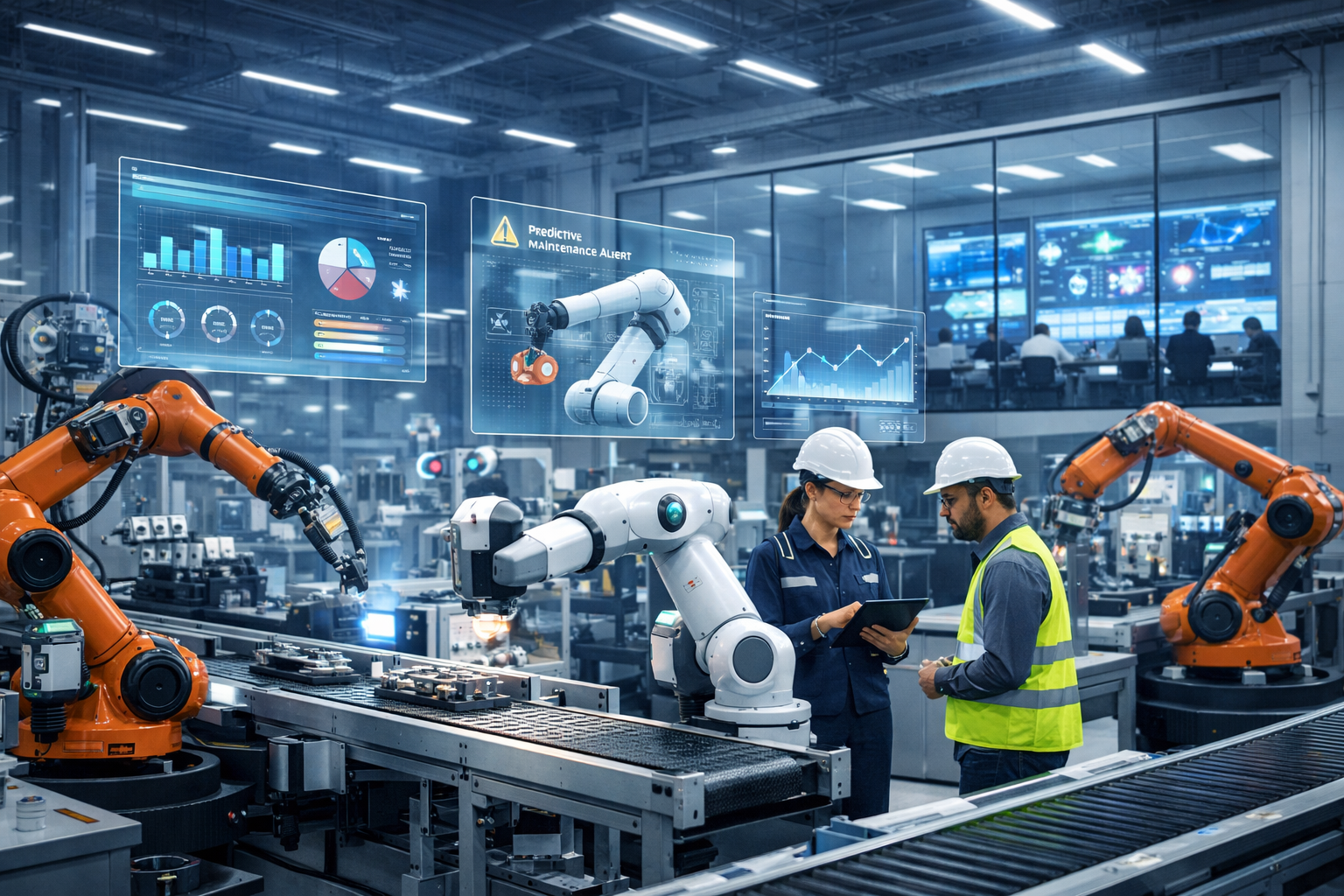
Manufacturing has changed dramatically over the last few decades. In the past, factories relied heavily on manual monitoring, isolated machines, and reactive maintenance. Today, however, digital transformation is reshaping the industry. At the center of this evolution is Smart Manufacturing.
Smart Manufacturing uses connected systems, automation, and data analytics to improve production processes. Instead of operating independently, machines, software, and people now communicate in real time. As a result, manufacturers gain better visibility, higher efficiency, and stronger control over operations.
In this guide, you will learn how intelligent production systems work, which technologies support them, and why they are shaping the future of manufacturing technology.
What Is Smart Manufacturing?
Smart Manufacturing is a technology-driven approach that integrates machines, data, and advanced software into a connected production environment. Unlike traditional factories, where information flows slowly, modern systems provide instant insights.
In other words, decisions are no longer based on guesswork or delayed reports. Instead, they rely on real-time data collected directly from the factory floor.
At its core, this approach focuses on:
- Automation of repetitive tasks
- Real-time performance monitoring
- Data-driven decision-making
- Continuous process improvement
- Seamless system integration
Because of these capabilities, companies can respond quickly to market changes and operational challenges.
How Connected Production Systems Work?
To understand how this works, it helps to look at the process step by step. First, sensors are installed on machines to collect operational data such as temperature, vibration, speed, and output levels. Next, that data is transmitted to centralized platforms for analysis.
Advanced software then evaluates patterns and identifies potential issues. For example, if a machine shows unusual vibration, the system can alert maintenance teams before a breakdown occurs. Consequently, downtime decreases and productivity improves.
Moreover, managers can monitor performance dashboards in real time. Instead of waiting for monthly reports, they can adjust production settings instantly. This proactive strategy increases reliability across the entire facility.
Key Technologies Behind Modern Manufacturing Systems
Several advanced technologies make intelligent production possible. Together, they create a flexible and efficient digital ecosystem.
1. Internet of Things (IoT)
IoT devices connect machines and systems across the factory floor. These sensors continuously gather data and send it to monitoring platforms. As a result, manufacturers gain full visibility into equipment performance.
2. Artificial Intelligence and Machine Learning
Artificial intelligence analyzes large volumes of operational data. Over time, machine learning algorithms improve accuracy by identifying patterns and predicting outcomes.
For instance, AI can forecast maintenance needs, detect product defects, and optimize scheduling. Therefore, companies reduce errors and improve overall efficiency.
3. Robotics and Automation
Robotic systems perform repetitive tasks with precision and consistency. In addition, collaborative robots can safely work alongside human employees.
Because automation reduces human error, product quality becomes more consistent. At the same time, workers can focus on higher-value responsibilities.
4. Cloud Computing
Cloud-based platforms store and process data securely. Furthermore, they allow companies to access production insights from multiple locations.
This scalability makes expansion easier while reducing infrastructure costs.
5. Advanced Data Analytics
Data analytics tools transform raw information into meaningful insights. By analyzing performance trends, managers can identify inefficiencies and improve workflows.
Ultimately, analytics supports smarter and faster decision-making.
Benefits of Smart Manufacturing
Organizations that adopt this modern approach often experience measurable improvements.
Increased Efficiency
Real-time monitoring reduces downtime and eliminates unnecessary delays. As a result, production lines operate more smoothly.
Improved Product Quality
Automated inspection systems detect defects early in the process. Consequently, waste decreases and customer satisfaction improves.
Cost Reduction
Predictive maintenance prevents expensive breakdowns. In addition, optimized inventory management reduces storage expenses.
Greater Flexibility
Connected systems allow quick adjustments to production schedules. Therefore, manufacturers can adapt to changing customer demands more easily.
Better Decision-Making
Because leaders have access to accurate data, they can make informed strategic decisions. Over time, this strengthens overall competitiveness.
Comparing Traditional and Digital Manufacturing
Although traditional methods remain in some facilities, the differences are clear.
| Traditional Manufacturing | Digital Manufacturing Systems |
|---|---|
| Manual monitoring | Real-time tracking |
| Reactive repairs | Predictive maintenance |
| Isolated departments | Integrated operations |
| Limited analytics | Advanced data insights |
| Slow adjustments | Rapid adaptability |
Clearly, modern systems offer greater intelligence and flexibility.
Challenges to Consider
Despite its advantages, implementing Smart Manufacturing requires careful planning.
Initial Investment
Upgrading equipment and installing digital tools can require significant capital. However, long-term savings often justify the expense.
Cybersecurity Risks
Because systems are connected, they may face cyber threats. Therefore, companies must invest in strong security protocols.
Workforce Training
Employees must learn how to operate advanced technologies. For this reason, ongoing training programs are essential.
Integration Complexity
Integrating new systems with older equipment can be challenging. Nevertheless, phased implementation reduces disruption and risk.
The Evolving Role of the Workforce
Many people assume automation eliminates jobs. In reality, it transforms them.
Instead of performing repetitive tasks, employees take on more technical and analytical roles. For example, workers may focus on system optimization, data interpretation, and process improvement.
As technology evolves, continuous learning becomes increasingly important. Consequently, organizations that invest in workforce development gain a competitive advantage.
Sustainability and Environmental Impact
Sustainability has become a major priority in modern industry. Fortunately, connected production systems support environmental goals.
For example, energy monitoring tools reduce unnecessary consumption. Similarly, waste tracking systems improve material efficiency.
By optimizing operations, companies reduce both costs and environmental impact. In the long run, this creates a more sustainable manufacturing ecosystem.
The Future of Smart Manufacturing
Looking ahead, innovation continues to accelerate. Emerging technologies such as digital twins, 5G connectivity, and autonomous systems are expanding possibilities. Industry leaders such as Siemens highlight how digital factories are reshaping global production through connected technologies and automation.
Moreover, advanced human-machine collaboration is improving safety and productivity. As these technologies become more accessible, small and medium-sized manufacturers will adopt them more widely.
Ultimately, the future of manufacturing technology will be defined by connectivity, intelligence, and adaptability.
How to Begin the Transition?
Companies interested in adopting Smart Manufacturing should take a structured approach.
First, assess current operations and identify inefficiencies. Next, implement small pilot projects to test new systems. After that, invest in employee training and cybersecurity measures.
Finally, measure performance improvements and scale gradually. By following this phased strategy, organizations can reduce risk while maximizing results.
Conclusion
Smart Manufacturing represents a major advancement in modern manufacturing technology. By combining automation, data analytics, and connected systems, businesses can improve efficiency, reduce costs, and enhance product quality.
Although implementation requires investment and strategic planning, the long-term benefits are substantial. As industries continue to evolve, intelligent production systems will play a central role in shaping competitive and sustainable operations.
Companies that embrace this transformation today position themselves for long-term growth and innovation in an increasingly digital world.