
 By Robert Smith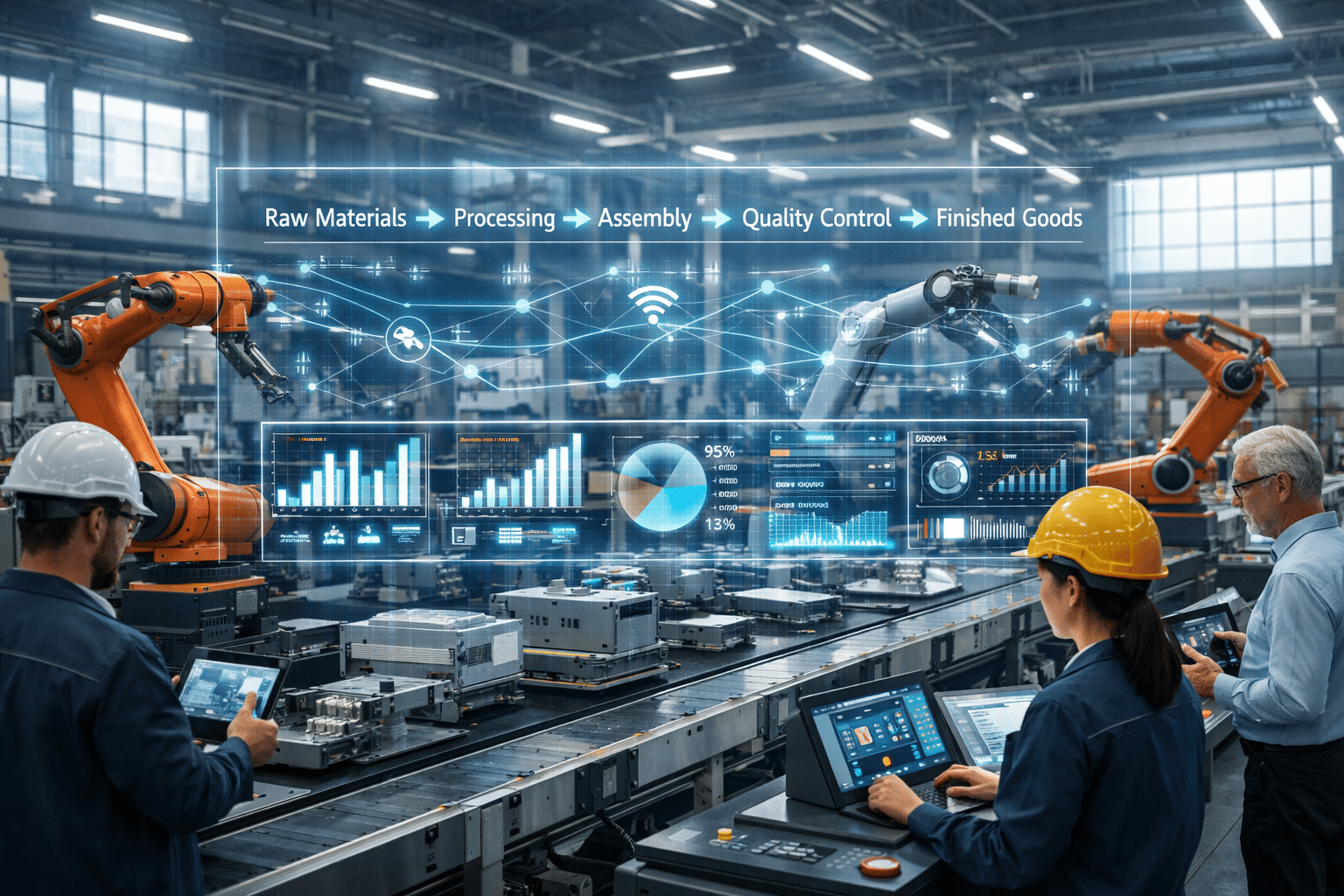
Manufacturing technology plays a critical role in shaping modern industries. At the center of every successful factory or industrial operation lies a structured approach that controls how goods are created. This structured approach is known as production systems.
For beginners entering the manufacturing field, understanding how these systems work is essential. For business owners and engineers, optimizing manufacturing operations can directly impact cost, quality, and long-term profitability.
This guide explains production systems in clear, practical terms while offering expert-level insight into their structure, types, and future direction.
What Are Production Systems?
Production systems refer to organized methods used to transform raw materials into finished products. According to Encyclopaedia Britannica’s explanation of production systems, these systems organize labor, equipment, and processes to ensure efficient industrial output.
In simple terms, a manufacturing operation follows a defined structure that determines:
- What will be produced
- How it will be manufactured
- When it will be delivered
- How much will be made
Without a structured approach, production becomes inefficient and inconsistent.
Why Structured Manufacturing Operations Matter?
A well-designed production framework provides several advantages:
- Improved operational efficiency
- Reduced material waste
- Consistent product quality
- Lower manufacturing costs
- Better time management
- Increased output capacity
Companies that invest in optimized manufacturing processes often gain a strong competitive advantage in global markets.
Major Types of Production Systems
Different industries require different manufacturing approaches. The correct method depends on product type, customer demand, and production volume.
1. Job Production
Job production focuses on creating one product at a time based on specific customer requirements.
Examples:
- Custom-built homes
- Specialized machinery
- Handcrafted furniture
Characteristics:
- High flexibility
- Skilled labor required
- Low production volume
- High customization
This approach is ideal for businesses that prioritize uniqueness over large-scale output.
2. Batch Manufacturing
Batch manufacturing produces goods in groups or batches. After one batch is completed, the equipment is adjusted to produce another variation.
Examples:
- Bakeries
- Clothing factories
- Pharmaceutical companies
Characteristics:
- Moderate production volume
- Changeovers between batches
- Balanced flexibility and efficiency
This method works well for companies that produce multiple variations of similar products.
3. Mass Manufacturing
Mass manufacturing focuses on producing standardized goods in large quantities, typically using assembly lines.
Examples:
- Automobiles
- Smartphones
- Household appliances
Characteristics:
- High output
- Standardized products
- Automated assembly processes
- Low cost per unit
This manufacturing structure allows companies to achieve economies of scale while maintaining consistent quality.
4. Continuous Processing
Continuous processing operates without interruption. Raw materials flow continuously through automated systems.
Examples:
- Oil refineries
- Chemical plants
- Cement factories
Characteristics:
- 24/7 operation
- Highly automated equipment
- Large-scale production
This method is ideal for industries with steady demand and minimal product variation.
Core Components of an Effective Manufacturing System
Every production environment consists of interconnected elements that must function smoothly together.
1. Input Resources
These include:
- Raw materials
- Labor
- Machinery
- Energy
- Capital investment
Efficient input management prevents delays and cost overruns.
2. Transformation Process
This stage converts raw materials into finished goods. It may involve:
- Machining
- Assembly
- Fabrication
- Testing
- Packaging
Modern manufacturing technology enhances this phase with automation, robotics, and digital monitoring tools.
3. Output
The final product must meet quality standards and customer expectations. High-performing industrial systems ensure:
- Consistency
- Safety compliance
- On-time delivery
4. Feedback and Control
Monitoring performance is essential. Feedback systems include:
- Quality inspections
- Performance metrics
- Equipment monitoring
- Customer satisfaction data
Continuous evaluation improves long-term efficiency.
Automation in Modern Production Systems
Automation has significantly transformed manufacturing technology. By integrating advanced tools and digital systems, companies can:
- Increase speed
- Reduce human error
- Improve safety
- Enhance accuracy
- Lower long-term costs
Examples of automation include:
- Robotic assembly arms
- CNC machines
- Automated guided vehicles (AGVs)
- Smart sensors
Automation does not eliminate human involvement. Instead, it shifts workers toward supervisory and technical roles.
Lean Manufacturing Principles
Lean manufacturing improves operational performance by reducing waste. It focuses on delivering value while eliminating unnecessary activities.
Key lean concepts include:
- Reducing excess inventory
- Minimizing defects
- Improving workflow
- Shortening production cycles
- Eliminating downtime
Businesses that adopt lean practices often experience improved profitability and customer satisfaction.
Flexible Manufacturing Systems
Flexible Manufacturing Systems (FMS) combine automation and computer control to adapt quickly to product changes.
Key benefits include:
- Rapid product variation
- Reduced setup time
- Increased machine utilization
- Improved responsiveness to market demand
This approach is ideal for companies that need both efficiency and customization.
Smart Manufacturing and Industry 4.0
The latest evolution in manufacturing technology is smart manufacturing, often associated with Industry 4.0.
Smart factories integrate:
- Artificial intelligence
- Internet of Things (IoT)
- Big data analytics
- Cloud computing
- Predictive maintenance systems
These technologies allow manufacturers to:
- Monitor operations in real time
- Predict equipment failures
- Optimize production flow
- Improve decision-making
The result is a more connected, intelligent industrial environment.
Designing an Effective Production Structure
When developing a manufacturing operation, several factors must be considered:
Product Type
Is the product customized or standardized?
Production Volume
Is demand low, moderate, or high?
Investment Budget
What level of automation is financially feasible?
Workforce Skills
Does the company have trained personnel for advanced technologies?
Facility Layout
Should the layout be process-based, product-based, or cellular?
Careful planning ensures long-term efficiency and scalability.
Common Challenges in Manufacturing Operations
Even well-designed industrial systems face obstacles, including:
- Equipment breakdowns
- Supply chain disruptions
- Rising material costs
- Workforce shortages
- Rapid technological change
Companies must adopt continuous improvement strategies to remain competitive.
The Future of Manufacturing Systems
The future of production systems will focus on:
- Sustainable manufacturing practices
- Renewable energy integration
- Advanced robotics collaboration
- Real-time data optimization
- Greater product customization
As global competition increases, businesses that invest in innovation and digital transformation will lead the market.
Conclusion
Production systems form the backbone of manufacturing technology. From small custom workshops to fully automated smart factories, structured manufacturing operations enable companies to transform raw materials into valuable products efficiently and consistently.
Understanding different production methods, their components, and technological advancements helps businesses make informed decisions. Whether you are a beginner exploring industrial concepts or a professional improving factory performance, mastering this subject is essential.
As manufacturing technology continues to evolve, structured and optimized operations will remain the key to sustainable growth and long-term success.