
 By Robert Smith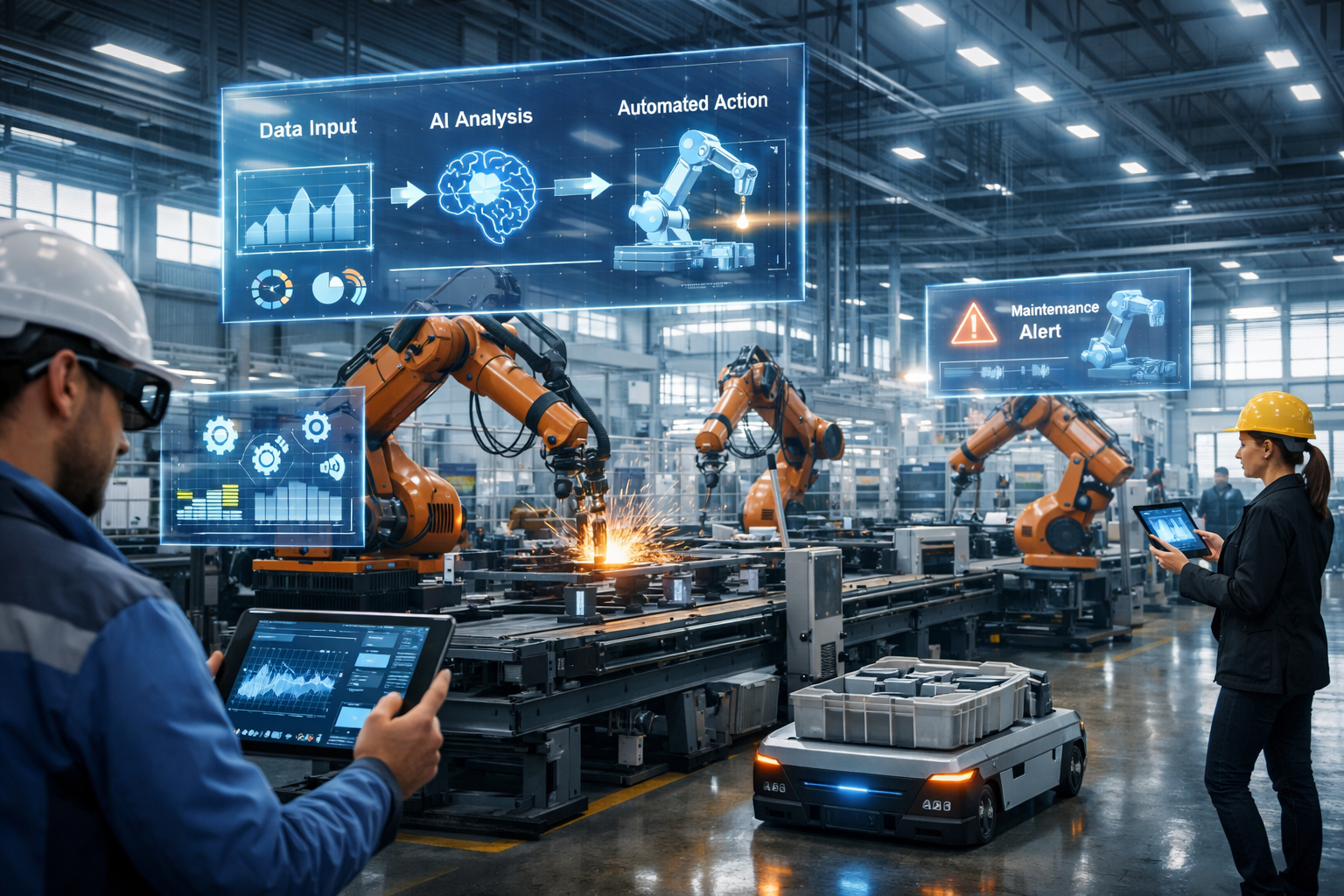
Manufacturing technology has evolved dramatically over the past century. From manual craftsmanship to automated assembly lines and computer-controlled machines, each stage of development has reshaped how products are made. Today, we are living in the age of Industry 4.0, a new phase of digital transformation that connects machines, data, and people in powerful ways.
This beginner-friendly guide explains what Industry 4.0 means, how it impacts manufacturing technology, and why it matters for businesses of all sizes.
What Is Industry 4.0?
Industry 4.0 refers to the fourth industrial revolution, which integrates digital technologies into manufacturing systems. It combines digital technologies, intelligent automation, and real-time data to create smart and connected production systems.
To understand this modern shift, let’s briefly look at the earlier industrial revolutions:
- First Industrial Revolution – Mechanization powered by steam and water.
- Second Industrial Revolution – Mass production driven by electricity.
- Third Industrial Revolution – Computer-based automation and electronics.
- Industry 4.0 – Intelligent, data-driven, and connected manufacturing systems.
Unlike previous revolutions that focused mainly on mechanization and automation, this new era emphasizes connectivity, analytics, and system-wide intelligence.
How Industry 4.0 Is Transforming Manufacturing Technology?
Manufacturing is no longer just about producing goods at scale. Modern companies must deliver speed, customization, efficiency, and sustainability. Industry 4.0 makes this possible by integrating advanced digital technologies into every stage of production.
Instead of isolated machines operating independently, factories now operate as connected ecosystems. Equipment communicates in real time, systems analyze performance instantly, and decision-making becomes faster and more accurate.
This transformation enables manufacturers to:
- Monitor operations remotely
- Predict equipment failures
- Improve product quality
- Reduce downtime
- Optimize supply chains
The result is the rise of the smart factory, a core concept in modern manufacturing.
Core Technologies Behind Industry 4.0
Industry 4.0 is not a single tool or software. It is a combination of several technologies working together to create intelligent production environments.
1. Internet of Things (IoT)
The Internet of Things connects machines, sensors, and devices to a network. These connected devices collect and transmit data such as temperature, pressure, vibration, and machine performance.
For example, a sensor can detect unusual vibration in a motor and send an alert before it fails. This process, known as predictive maintenance, reduces costly downtime and improves equipment lifespan.
2. Artificial Intelligence and Machine Learning
Artificial intelligence (AI) allows manufacturing systems to analyze large volumes of data and make informed decisions. Machine learning enables systems to improve performance over time.
In manufacturing technology, AI can:
- Detect defects using image recognition
- Optimize production schedules
- Forecast product demand
- Improve inventory management
These capabilities make operations more accurate and efficient.
3. Robotics and Advanced Automation
Robotics plays a critical role in digital manufacturing environments. Modern robots are flexible, precise, and capable of working safely alongside humans.
Collaborative robots, also called cobots, assist workers with repetitive or physically demanding tasks. Unlike traditional automation, smart robotics systems adjust operations based on real-time data.
This leads to higher productivity and consistent product quality.
4. Cloud Computing
Cloud computing enables manufacturers to store and access production data remotely. Instead of relying solely on local servers, companies can use cloud platforms to scale operations and improve collaboration.
Benefits include:
- Real-time global data access
- Lower IT infrastructure costs
- Faster software updates
- Improved communication across facilities
Cloud systems make advanced manufacturing technology accessible even to smaller businesses.
5. Big Data and Analytics
Manufacturing operations generate massive amounts of data every second. Big data analytics tools convert this information into valuable insights.
With advanced analytics, companies can:
- Identify inefficiencies
- Reduce waste
- Improve energy usage
- Enhance quality control
The ability to analyze data quickly is one of the strongest advantages of Industry 4.0.
6. Digital Twins
A digital twin is a virtual representation of a physical asset, process, or system. Engineers can simulate real-world conditions and test improvements digitally before applying them in production.
This reduces risk, lowers development costs, and speeds up innovation.
What Is a Smart Factory?
A smart factory is a highly connected and automated production facility powered by intelligent systems. In this environment:
- Machines communicate automatically
- Production adjusts based on demand
- Systems monitor performance continuously
- Data supports instant decision-making
Human workers remain essential, but their roles shift from repetitive labor to strategic oversight and problem-solving.
The smart factory model represents the practical application of Industry 4.0 principles.
Benefits of Industry 4.0 in Manufacturing
The advantages of digital transformation in manufacturing technology are significant.
Increased Efficiency
Automated and connected systems reduce delays and eliminate manual errors. Predictive maintenance prevents unexpected breakdowns.
Improved Product Quality
AI-powered inspection tools identify defects early, reducing returns and waste.
Cost Savings
Optimized production processes lower energy consumption and material waste.
Greater Flexibility
Manufacturers can quickly adapt to new product designs or customer requirements without redesigning entire production lines.
Enhanced Supply Chain Visibility
Real-time tracking improves inventory management and reduces delays.
Better Workplace Safety
Sensors and monitoring systems detect hazardous conditions, helping protect employees.
Challenges of Implementing Industry 4.0
Although the benefits are clear, adopting Industry 4.0 technologies requires careful planning.
High Initial Investment
Upgrading equipment, installing sensors, and integrating software systems can be expensive.
Cybersecurity Risks
Connected systems increase exposure to cyber threats. Strong digital security measures are essential.
Skills Gap
Workers need training in digital tools, data analysis, and system management.
Integration Issues
Older machines may not easily connect with modern digital platforms.
Despite these challenges, many companies find that long-term efficiency gains outweigh initial costs.
Industry 4.0 for Small and Medium Manufacturers
Industry 4.0 is not limited to large corporations. Small and medium-sized manufacturers can also benefit from digital transformation.
Affordable cloud solutions, modular automation tools, and scalable IoT systems allow gradual implementation.
Small businesses can begin by:
- Installing basic machine sensors
- Using cloud-based monitoring software
- Automating repetitive tasks
- Analyzing simple performance data
Starting small reduces risk while building digital capabilities over time.
The Future of Manufacturing Technology
Manufacturing technology will continue to evolve as intelligent systems become more advanced. The foundation built by Industry 4.0 will likely support future developments such as:
- Fully autonomous production lines
- Hyper-personalized manufacturing
- Sustainable smart factories
- Enhanced human-machine collaboration
Companies that embrace digital transformation today position themselves for long-term success.
How to Begin the Transition?
If you are new to this concept, start with a structured approach:
- Assess your current operations and identify inefficiencies.
- Set clear goals for productivity, quality, or cost reduction.
- Implement one or two digital technologies first.
- Train employees to use new systems effectively.
- Measure results and expand gradually.
A step-by-step strategy ensures smoother adoption and better outcomes.
Conclusion
Industry 4.0 represents a major shift in manufacturing technology. By integrating intelligent automation, real-time data, cloud systems, and advanced analytics, manufacturers can create highly efficient and connected production environments.
This modern industrial revolution is about more than machines. It is about using data intelligently to improve decisions, reduce waste, and increase competitiveness.
Businesses that adapt to Industry 4.0 gain stronger operational control, better product quality, and improved long-term sustainability. As manufacturing continues to evolve, embracing digital transformation is no longer optional—it is essential for staying competitive in today’s global market.