
 By Robert Smith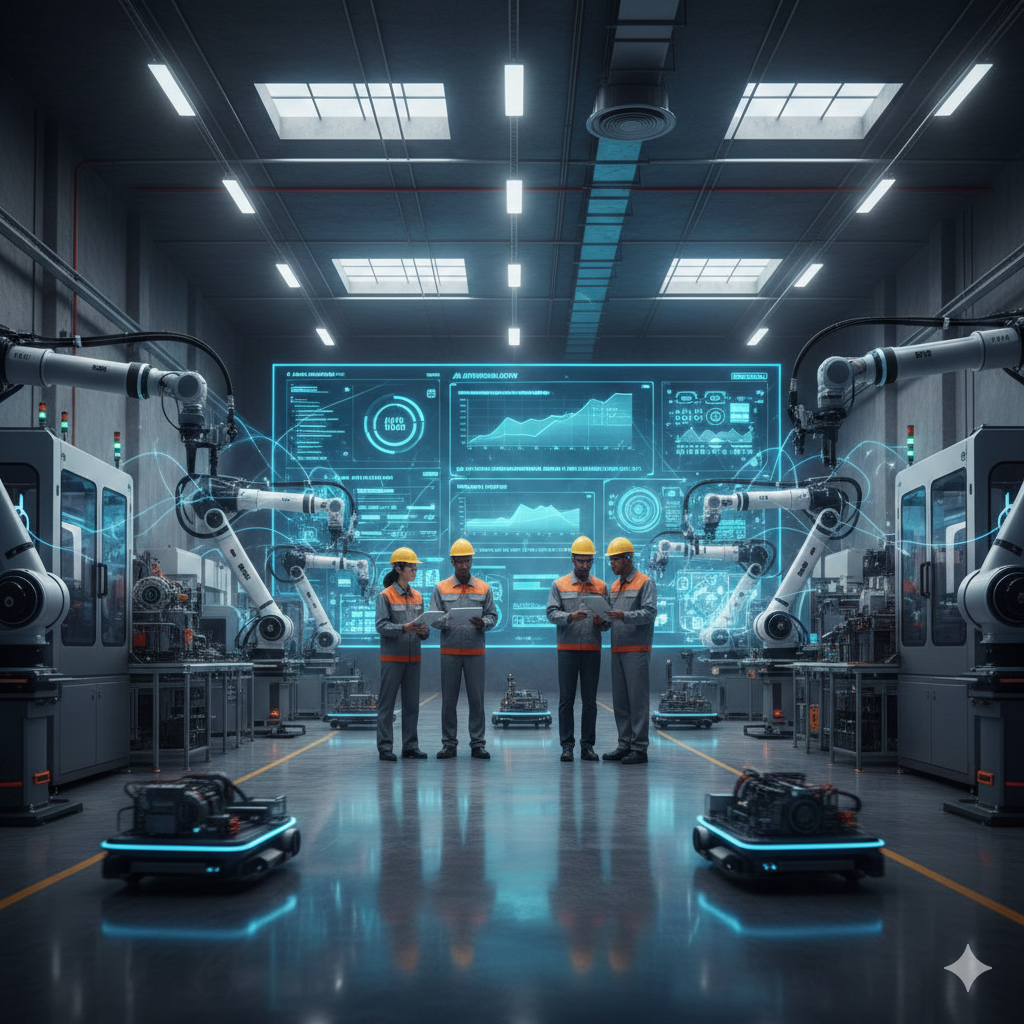
Smart factories are transforming the way products are designed, manufactured, and delivered. By combining IoT & Automation technologies, modern manufacturing environments are becoming more connected, data-driven, and efficient than ever before.
In this beginner-friendly guide, you’ll learn what smart factories are, how they work, the technologies behind them, and why they are central to the future of industrial production.
What Are Smart Factories?
A smart factory is a digitally connected manufacturing facility that uses sensors, software, and automation systems to collect and analyze data in real time. Unlike traditional factories, smart factories rely on intelligent machines that can communicate with each other, adapt to changing conditions, and optimize processes with minimal human intervention. For a deeper industry definition, see this detailed explanation of what a smart factory is.
At the core of this transformation is IoT & Automation. Internet of Things (IoT) devices gather operational data from machines, while automation systems execute tasks with precision and consistency.
In simple terms, a smart factory is a production environment where machines “talk” to each other and make data-driven decisions.
How IoT & Automation Power Smart Factories?
To understand smart factories, it’s important to see how IoT & Automation work together.
1. IoT Sensors and Devices
IoT sensors are embedded into machines, conveyor belts, robotic arms, and storage systems. These sensors collect data such as:
- Temperature
- Pressure
- Vibration
- Speed
- Energy usage
- Production counts
The data is transmitted through secure networks to centralized systems or cloud platforms for analysis.
2. Automation Systems
Automation in manufacturing includes:
- Programmable Logic Controllers (PLCs)
- Industrial robots
- Automated guided vehicles (AGVs)
- Supervisory Control and Data Acquisition (SCADA) systems
These systems execute repetitive tasks, manage workflows, and respond to real-time instructions based on sensor data.
3. Data Analytics and AI
Once data is collected, advanced analytics tools process it. Artificial intelligence (AI) algorithms identify patterns, predict failures, and recommend optimizations. This allows factories to move from reactive maintenance to predictive maintenance.
Together, IoT & Automation create a self-monitoring and self-optimizing production system.
Key Components of a Smart Factory
A smart factory is built on multiple integrated technologies. Let’s explore the most important components.
Connected Machines
Machines are equipped with IoT devices that allow them to send and receive data. This connectivity ensures that production lines operate in sync.
Edge Computing
Edge computing processes data close to the source, reducing latency and bandwidth usage. Instead of sending all data to the cloud, critical decisions can be made locally in milliseconds.
Cloud Platforms
Cloud computing enables scalable data storage and advanced analytics. Manufacturers can monitor multiple facilities from a central dashboard.
Cybersecurity Systems
As connectivity increases, so does risk. It rely on strong cybersecurity frameworks to protect sensitive operational data and prevent cyberattacks.
Human-Machine Interfaces (HMI)
Operators interact with machines through intuitive dashboards and control panels. Real-time visualizations help workers make informed decisions quickly.
Benefits of Smart Factories
It provide measurable advantages across production, quality, and cost management.
Improved Efficiency
Real-time monitoring allows manufacturers to identify bottlenecks instantly. Automation reduces downtime and speeds up production cycles.
Predictive Maintenance
Instead of waiting for machines to fail, IoT sensors detect early warning signs. Maintenance teams can fix issues before breakdowns occur, minimizing costly disruptions.
Higher Product Quality
Automated inspection systems use cameras and AI to detect defects. Continuous quality monitoring ensures consistent output.
Energy Optimization
Tracking energy usage across equipment. Data-driven adjustments reduce waste and improve sustainability.
Flexible Manufacturing
Production lines can be reconfigured quickly to handle custom orders or small batch production. This is especially valuable in industries that demand personalization.
Real-World Applications of Smart Factories
Smart factories are not limited to a single industry. They are widely adopted across multiple sectors.
Automotive Manufacturing
Robotic arms assemble vehicles with high precision. IoT sensors monitor welding temperatures and torque settings to ensure safety standards.
Electronics Production
Microchip fabrication requires exact environmental control. Smart factories use real-time monitoring to maintain optimal humidity and temperature levels.
Food and Beverage
Automation systems track ingredients, monitor packaging lines, and ensure compliance with safety regulations.
Pharmaceuticals
Smart factories maintain strict quality control through automated testing and digital batch records.
These applications demonstrate how IoT & Automation are reshaping global supply chains.
Smart Factories and Industry 4.0
Smart factories are a core element of Industry 4.0, often referred to as the Fourth Industrial Revolution. This phase of industrial development emphasizes digital transformation, connectivity, and intelligent automation.
Earlier industrial revolutions focused on:
- Mechanization (steam power)
- Electrification (mass production)
- Computerization (basic automation)
Industry 4.0 introduces cyber-physical systems, IoT & Automation integration, and real-time data exchange.
Smart factories represent the practical implementation of this revolution.
Challenges in Implementing Smart Factories
While the benefits are clear, transitioning to a smart factory model is not without challenges.
High Initial Investment
Upgrading equipment, installing sensors, and deploying software platforms require significant capital.
Integration Complexity
Legacy systems may not easily connect with modern IoT platforms. Integration requires careful planning and expertise.
Cybersecurity Risks
Connected systems increase vulnerability to cyber threats. Strong encryption and access controls are essential.
Workforce Training
Employees must learn to operate advanced digital tools. Training programs are critical to ensure smooth adoption.
Despite these challenges, long-term gains often outweigh initial costs.
The Role of Data in Smart Factories
Data is the backbone of smart factories. Without accurate and timely data, automation systems cannot function effectively.
Data flows typically follow this path:
- Sensors collect raw information.
- Edge devices preprocess data.
- Cloud systems store and analyze data.
- Analytics platforms generate insights.
- Automation systems execute optimized actions.
This closed-loop system enables continuous improvement. Over time, the factory becomes smarter as algorithms learn from historical data.
Future Trends in Smart Factories
The evolution of smart factories is ongoing. Several emerging trends are shaping the next phase of IoT & Automation in manufacturing.
Digital Twins
Digital twins are virtual replicas of physical machines or production lines. Engineers can simulate changes before implementing them in the real world.
5G Connectivity
High-speed, low-latency networks enhance machine-to-machine communication and enable faster data transmission.
Collaborative Robots (Cobots)
Cobots work safely alongside human operators, increasing productivity without replacing human expertise.
Sustainable Manufacturing
Smart factories are focusing on reducing carbon footprints through data-driven energy management.
These innovations will make manufacturing more intelligent, adaptive, and environmentally responsible.
Why Smart Factories Matter for the Future?
Global competition demands faster production, higher quality, and lower costs. Smart factories address these challenges by combining IoT & Automation with advanced analytics and robotics.
They enable:
- Faster time to market
- Reduced operational costs
- Enhanced customer satisfaction
- Improved workplace safety
As industries embrace digital transformation, smart factories will become the standard rather than the exception.
Conclusion
Smart factories represent the future of IoT & Automation in manufacturing. By integrating connected devices, real-time analytics, and intelligent automation systems, companies can achieve higher efficiency, improved quality, and greater flexibility.
For beginners, the key takeaway is simple: a smart factory uses data and connectivity to make manufacturing smarter. Sensors gather information, automation systems act on insights, and analytics continuously optimize performance.
While implementation requires investment and expertise, the long-term advantages are significant. As technology advances, smart factories will continue to evolve, driving innovation across global industries.
Understanding smart factories today prepares businesses and professionals for the next generation of industrial transformation.