
 By Robert Smith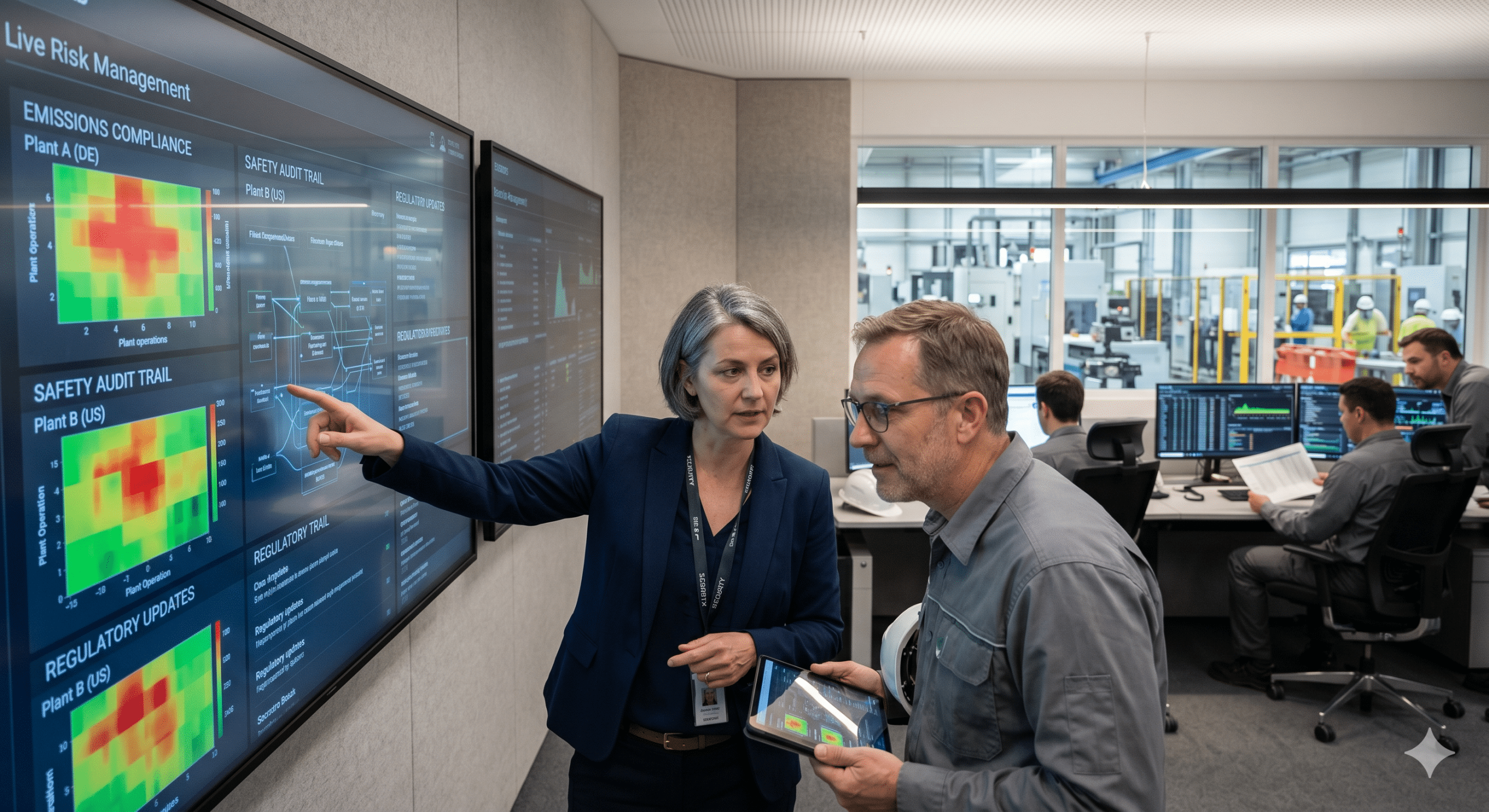
Industrial companies are operating in a completely different world today compared to even a decade ago. Manufacturing plants are becoming smarter, supply chains are becoming more connected, and industrial systems are now heavily dependent on automation, cloud platforms, artificial intelligence, and real-time data monitoring. While these advancements have improved efficiency and productivity, they have also introduced a new level of operational complexity that many organizations were not fully prepared for.
As an industrial engineer, one thing becomes very clear after spending time around production environments, warehouses, logistics facilities, and manufacturing operations. The more complex operations become, the more important governance and risk management become as well. Unfortunately, many organizations still treat compliance as an afterthought instead of recognizing it as a core operational strategy.
For years, companies approached compliance by reacting only when problems occurred. Safety inspections happened after incidents. Environmental reports were prepared only when deadlines approached. Equipment maintenance records were scattered across spreadsheets, paperwork, and disconnected systems. As a result, many businesses struggled with inefficiencies, costly penalties, operational downtime, and avoidable safety risks.
Today, however, industrial organizations are beginning to understand that strong governance is not just about satisfying regulators. Instead, it is about creating operational stability, protecting long-term profitability, and improving organizational accountability. This is exactly where Regulatory Compliance Tech is making a major difference.
Modern compliance technology is transforming how industrial companies monitor risk, manage regulations, improve transparency, and maintain operational control. Instead of relying on outdated manual systems, organizations can now use connected digital tools that provide real-time visibility into operations, environmental performance, cybersecurity threats, workplace safety, and supplier compliance.
More importantly, these systems are helping businesses move from reactive management to proactive risk prevention.
Why Industrial Governance Matters More Than Ever
Industrial governance may sound like a corporate term that only executives discuss during board meetings, but in reality, it directly affects daily operations inside every industrial facility. Governance determines how decisions are made, how accountability is enforced, and how operational risks are controlled throughout the organization.
Without strong governance, even highly productive operations can become unstable over time.
For example, a manufacturing plant may produce large volumes efficiently, yet still face major operational risks if safety inspections are inconsistent, supplier oversight is weak, or maintenance procedures are poorly documented. Similarly, companies may struggle with environmental violations, quality inconsistencies, labor issues, or cybersecurity vulnerabilities if governance systems are not properly established.
At the same time, industrial organizations are now facing far more pressure from regulators, investors, and customers than ever before. Governments continue introducing stricter regulations regarding environmental impact, worker safety, emissions reporting, cybersecurity, and ethical sourcing. Meanwhile, customers expect companies to operate responsibly and transparently.
Consequently, governance has become deeply connected to operational reputation and business sustainability.
Strong governance creates structure inside industrial organizations. Employees understand their responsibilities more clearly, managers gain better operational visibility, and leadership teams can make decisions based on reliable data instead of assumptions. Furthermore, governance helps reduce confusion by creating standardized processes that improve consistency across operations.
From an industrial engineering perspective, governance also supports process optimization. When systems are standardized and measurable, organizations can identify inefficiencies more effectively and improve operational performance over time.
The Growing Risk Landscape in Modern Industry
Industrial risk management has changed dramatically over the past several years. In the past, most industrial risks were physical in nature. Companies focused primarily on machine failures, worker injuries, fire hazards, chemical leaks, and production disruptions.
Although those risks still exist today, industrial organizations must now manage an entirely new category of digital and operational risks.
For instance, many factories now rely on connected Industrial Internet of Things devices, cloud-based monitoring systems, remote operations platforms, and automated robotics. While these technologies improve productivity, they also increase cybersecurity exposure. Unfortunately, many industrial companies still operate using outdated operational technology systems that were never designed to defend against modern cyber threats.
As a result, cyberattacks targeting industrial infrastructure have increased significantly in recent years. A single ransomware attack can disrupt production lines, damage equipment, compromise sensitive operational data, and create major financial losses. In some cases, cybersecurity failures can even create physical safety hazards for workers inside facilities.
At the same time, environmental regulations are becoming stricter across many industries. Organizations are now expected to provide accurate reporting regarding emissions, waste disposal, water usage, sustainability practices, and carbon reduction efforts. Additionally, labor laws and supply chain transparency requirements continue evolving globally.
Because of these growing pressures, managing compliance manually is becoming almost impossible for many organizations.
This is one reason why Regulatory Compliance Tech is no longer viewed as optional software. Instead, it is becoming critical operational infrastructure for modern industrial businesses.
The Shift From Manual Compliance to Smart Compliance Systems
For decades, industrial compliance relied heavily on paperwork and manual oversight. Safety reports were stored inside filing cabinets, maintenance logs were handwritten, and compliance tracking depended heavily on spreadsheets. Although these methods worked in smaller environments, they often created major inefficiencies as operations expanded.
The biggest problem with manual compliance systems is inconsistency.
Human error eventually affects documentation accuracy, reporting timelines, and operational oversight. Furthermore, disconnected departments often create communication gaps that increase operational risk. For example, maintenance teams may not receive updated inspection schedules on time, while procurement departments may overlook supplier compliance requirements.
Consequently, organizations operating with fragmented compliance systems often struggle during audits, inspections, or operational incidents.
Regulatory Compliance Tech solves many of these problems by centralizing compliance management into connected digital platforms.
Instead of relying on scattered documents, organizations can monitor operational compliance in real time. Sensors can automatically track equipment conditions, environmental monitoring systems can continuously measure emissions levels, and digital dashboards can alert managers when risks begin to develop.
Additionally, cloud-based platforms allow organizations to store audit records securely while making documentation easier to access during inspections.
This transition from manual compliance to digital compliance creates significant operational improvements.
Employees spend less time handling repetitive administrative tasks, while managers gain faster access to accurate operational data. More importantly, organizations can identify risks earlier instead of reacting after incidents occur.
From an industrial engineering perspective, this shift improves both efficiency and reliability. When information flows properly across departments, operations become more predictable and easier to optimize.
How Regulatory Compliance Tech Improves Operational Efficiency
Many people assume compliance systems slow down operations because they associate compliance with paperwork and restrictions. However, modern Regulatory Compliance Tech often improves operational efficiency significantly.
One major advantage is automation.
When organizations automate compliance monitoring, employees no longer need to spend countless hours manually tracking inspections, certifications, maintenance schedules, or environmental reports. As a result, teams can focus more attention on solving operational challenges and improving productivity.
For example, predictive maintenance systems can automatically notify maintenance teams when equipment performance begins declining. Instead of waiting for breakdowns to happen, organizations can schedule repairs proactively before failures disrupt production.
Similarly, digital inspection systems allow managers to monitor workplace safety conditions continuously rather than relying only on occasional manual audits. This improves consistency while reducing the risk of overlooked hazards.
Another important advantage involves real-time visibility.
Modern compliance dashboards allow leadership teams to monitor operational risks across multiple facilities simultaneously. Consequently, decision-making becomes faster, more accurate, and more data-driven.
In many cases, companies discover that compliance improvements also reduce operational costs over time. Fewer workplace incidents reduce insurance expenses and downtime. Better environmental tracking minimizes regulatory penalties. Stronger governance systems also reduce costly operational surprises that can damage productivity and profitability.
Therefore, compliance technology should not be viewed simply as a regulatory requirement. Instead, it should be viewed as an operational improvement strategy.
Environmental Compliance Is Driving Technology Investments
Environmental accountability has become one of the strongest drivers behind industrial compliance modernization.
Today, governments, investors, and consumers expect organizations to operate responsibly and transparently regarding sustainability. Consequently, industrial companies face increasing pressure to reduce emissions, improve energy efficiency, and document environmental performance accurately.
In the past, many organizations handled environmental reporting manually. However, manual tracking often created delays, inconsistencies, and reporting errors.
Now, Regulatory Compliance Tech allows organizations to monitor environmental performance continuously in real time.
For example, environmental management systems can track emissions levels, energy consumption, waste production, and water usage automatically. Furthermore, advanced analytics tools can identify operational inefficiencies that contribute to unnecessary energy waste or environmental impact.
From an industrial engineering perspective, this creates valuable optimization opportunities.
Many organizations discover that sustainability initiatives improve operational efficiency while also supporting compliance goals. Reduced energy waste lowers operating costs. Improved resource utilization minimizes production inefficiencies. Better waste management reduces disposal expenses.
As a result, environmental compliance is increasingly becoming part of broader operational improvement strategies rather than simply a regulatory obligation.
Cybersecurity Has Become a Governance Priority
One of the biggest changes in industrial governance involves the growing relationship between compliance and cybersecurity.
Modern factories are now deeply connected through automation systems, industrial networks, cloud platforms, and remote monitoring technologies. Although this connectivity improves operational efficiency, it also creates serious vulnerabilities if governance systems are weak.
Cyberattacks against industrial facilities can create devastating consequences.
Production systems may shut down unexpectedly. Sensitive operational data may become compromised. In severe cases, cyber incidents can even create physical safety risks for employees and surrounding communities.
Because of these risks, cybersecurity is no longer just an IT responsibility. Instead, it has become a core governance issue that directly affects operational stability.
Regulatory Compliance Tech helps organizations strengthen cybersecurity governance through access monitoring, digital audit trails, automated policy enforcement, and continuous risk monitoring.
Additionally, organizations can use compliance platforms to improve incident response procedures, employee access controls, and cybersecurity training programs.
As industrial digital transformation continues expanding, cybersecurity governance will only become more important in the years ahead.
Why Compliance Culture Matters
Although technology plays a major role in modern governance, software alone cannot create effective compliance systems.
Organizational culture remains extremely important.
Employees need to understand why compliance procedures exist instead of viewing them as unnecessary administrative burdens. Managers must also lead by example by following operational standards consistently.
Unfortunately, some organizations invest heavily in compliance software while ignoring employee engagement and operational discipline. As a result, even advanced systems may fail if workers bypass procedures or ignore reporting requirements.
Successful industrial companies create cultures where accountability becomes part of everyday operations.
This requires leadership involvement, employee training, clear communication, and operational consistency. Furthermore, organizations should design compliance systems that support employees instead of overwhelming them with unnecessary complexity.
From an industrial engineering standpoint, systems perform best when they align naturally with human behavior and workflow patterns.
Simple, user-friendly systems encourage participation, while overly complicated systems often create resistance and frustration.
The Financial Cost of Poor Governance
Some companies still hesitate to invest in governance improvements because they view compliance as an unnecessary expense. However, poor governance often creates far greater financial losses over time.
Regulatory penalties alone can cost millions of dollars. Additionally, operational shutdowns caused by safety violations, cyberattacks, or environmental incidents can severely damage profitability.
Reputational damage is another major concern.
Customers, investors, and business partners increasingly expect organizations to demonstrate operational responsibility and transparency. Consequently, companies with weak governance systems may struggle to maintain customer trust and market competitiveness.
Strong Regulatory Compliance Tech helps reduce these risks by improving visibility, accountability, and operational consistency.
More importantly, proactive governance helps organizations prevent incidents before they escalate into expensive crises.
In many situations, preventing a single major operational failure justifies the entire investment in compliance technology.
The Future of Industrial Governance and Risk Management
Industrial governance will continue evolving rapidly as technology becomes more advanced and operational systems become increasingly connected.
Artificial intelligence, predictive analytics, blockchain verification, and digital twin technologies will likely play larger roles in future compliance management systems. These tools will help organizations identify risks earlier, improve operational forecasting, and strengthen transparency across supply chains.
However, technology alone will never fully replace human oversight.
Leadership accountability, ethical decision-making, operational discipline, and employee engagement will remain essential components of effective governance.
The organizations that succeed in the future will be those that combine technological innovation with strong operational leadership.
From an industrial engineering perspective, the future of governance is not simply about regulatory compliance. Instead, it is about building resilient operational systems that can adapt to evolving risks while maintaining efficiency, safety, and long-term sustainability.
Conclusion
Industrial governance and risk management are no longer secondary business concerns. Instead, they have become essential foundations for operational success in modern industry.
As industrial systems become more connected and regulations become more complex, organizations can no longer rely on outdated manual compliance processes. Consequently, Regulatory Compliance Tech is helping businesses transform governance into a proactive operational strategy rather than a reactive administrative burden.
These technologies improve visibility, strengthen accountability, reduce operational risk, and support long-term business stability. At the same time, they help organizations improve efficiency, strengthen cybersecurity, enhance environmental performance, and build greater trust with regulators, investors, employees, and customers.
Ultimately, the goal of modern governance is not simply avoiding penalties. The real objective is creating safer, smarter, more reliable operations that can sustain long-term growth in an increasingly complex industrial world.
Frequently Asked Questions
What is Regulatory Compliance Tech?
Regulatory Compliance Tech refers to digital tools and software systems that help organizations monitor regulations, automate reporting, manage operational risks, and maintain compliance standards more efficiently.
Why is Regulatory Compliance Tech important in manufacturing?
Manufacturing operations face complex regulations related to safety, environmental performance, cybersecurity, labor standards, and operational reporting. Compliance technology helps organizations manage these responsibilities accurately and consistently.
Can compliance technology improve operational efficiency?
Yes. Modern compliance systems automate repetitive tasks, improve visibility, reduce manual paperwork, strengthen maintenance scheduling, and support faster operational decision-making.
How does compliance technology support cybersecurity?
Compliance platforms help organizations monitor digital access, maintain audit trails, enforce cybersecurity policies, and identify suspicious operational activity before major incidents occur.
Is Regulatory Compliance Tech only for large companies?
No. Small and medium-sized industrial organizations can also benefit significantly because compliance technology improves organization, reduces risk, and simplifies reporting requirements.
Further Reading
For readers who want deeper insights into governance, risk management, and compliance technology, these resources provide valuable information:
- Diligent – Regulatory Compliance Guide
- MetricStream – Compliance Resilience Through Technology
- Protecht Group – Compliance Best Practices Guide
- Pirani – Governance, Risk, and Compliance Overview
- SpringVerify – Regulatory Compliance Risk Management